
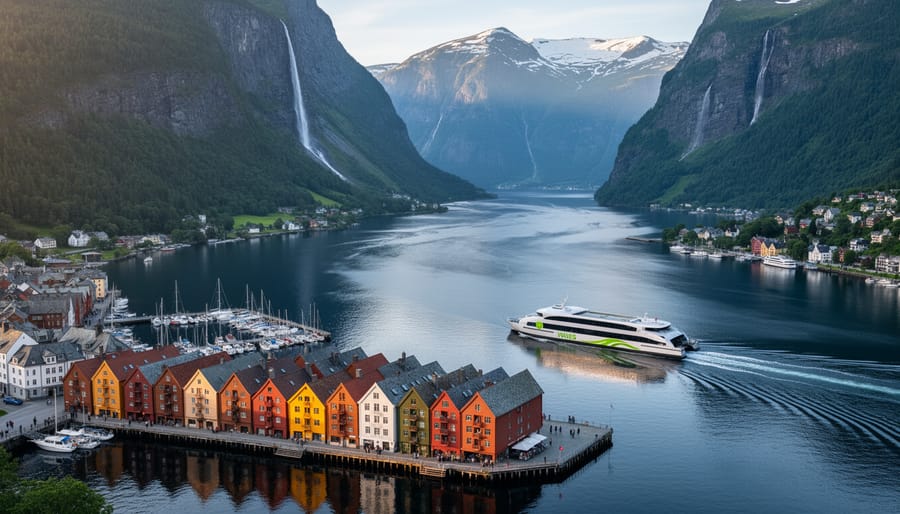
Bergen stands as Norway’s undisputed gateway to the fjords, positioned perfectly where urban sophistication meets some of Scandinavia’s most breathtaking natural wonders. Within two hours of this UNESCO-listed harbor city, you’ll find yourself gliding through mirror-like waters flanked by thousand-meter cliffs, cascading waterfalls, and villages that seem suspended in time.
The city’s strategic location on Norway’s southwestern coast grants unparalleled access to iconic waterways like Sognefjord, the world’s longest and deepest fjord, and the dramatic Hardangerfjord with its springtime orchards blooming against snow-capped peaks. Closer still, Mostraumen and Osterfjord offer half-day escapes for travelers with limited time, proving you don’t need weeks to experience authentic fjord majesty.
What makes Bergen exceptional isn’t just proximity—it’s accessibility. Electric ferries, sustainable bus routes, and the historic Bergen Railway connect you to these natural cathedrals while minimizing environmental impact. You can explore Bergen’s urban attractions in the morning, then stand beneath thundering waterfalls by afternoon, all without renting a car or joining overcrowded tour buses.
This fusion of convenience and authenticity attracts everyone from families seeking gentle boat cruises to adventurers craving kayaking through narrow sounds. Bergen serves not merely as a starting point but as an integral part of your fjord journey, where centuries of maritime heritage inform how locals—and increasingly, visitors—approach these landscapes with reverence rather than mere tourism.
Understanding which fjords lie within reach, how to access them responsibly, and what experiences align with your travel style transforms Bergen from another Scandinavian city into your personal fjord basecamp. The question isn’t whether to visit the Norwegian fjords from Bergen, but which ones to prioritize first.
Why Bergen Makes the Perfect Fjord Base
Bergen’s Geographic Sweet Spot
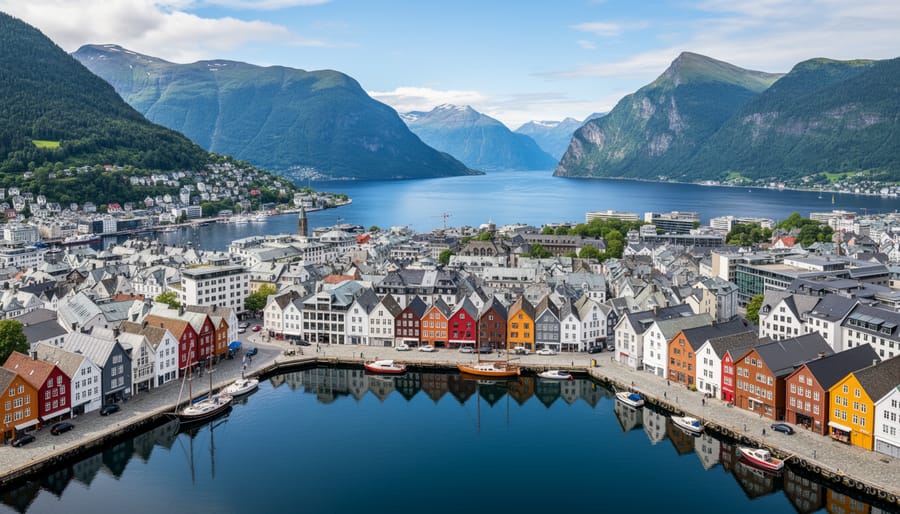
Bergen’s location on Norway’s southwestern coast isn’t just scenic—it’s strategically perfect for fjord exploration. The city sits at the gateway to some of Scandinavia’s most spectacular waterways, with the famous Sognefjord (Norway’s longest and deepest fjord) just 75 kilometers northeast, reachable in under two hours by car or boat. The equally stunning Hardangerfjord lies even closer, approximately 60 kilometers to the south, making it an easy day trip destination.
This geographic positioning means you won’t waste precious vacation time on lengthy transfers. Unlike some Norwegian cities where reaching the fjords requires extensive planning, Bergen offers immediate access. The Osterfjord and Sørfjord systems begin practically at the city’s doorstep, while the photogenic Nærøyfjord—a UNESCO World Heritage site—sits just two to three hours away depending on your chosen route.
Bergen’s compact geography creates remarkable efficiency for travelers. You can genuinely enjoy breakfast in the historic Bryggen wharf district, cruise through dramatic fjord landscapes by midday, and return for dinner at a harborside restaurant. This proximity allows for flexible, sustainable travel choices too. Rather than relying solely on rental cars, you can utilize Bergen’s excellent public ferry connections and bus services, reducing your environmental footprint while experiencing authentic Norwegian coastal transport. The city functions as nature’s perfectly placed base camp, where magnificent wilderness encounters don’t require sacrificing urban comforts or extensive journey times.
From City Streets to Fjord Waters in Hours
One of Bergen’s greatest advantages as a fjord destination is the remarkable speed at which you can leave the city buzz behind and find yourself surrounded by towering mountains and mirror-like waters. This isn’t a journey requiring elaborate planning or full-day commitments—you can literally enjoy breakfast at a Bergen café and be cruising through fjord waters before lunch.
The efficiency is genuinely impressive. Hardangerfjord lies just 90 minutes away by car or bus, while Sognefjord’s dramatic landscapes begin appearing within two hours. Even the legendary Nærøyfjord, a UNESCO World Heritage site, becomes accessible through day trips that feel surprisingly manageable. Express boat services departing from Bergen’s harbor transport you directly into fjord territory in under two hours, transforming your morning commute time into a gateway to wilderness.
This convenience doesn’t diminish the experience—quite the opposite. The gradual transition from Bergen’s colorful Bryggen wharf through pastoral valleys into increasingly dramatic landscapes creates a natural progression that heightens appreciation for the fjords themselves. You’ll witness how Norwegians have adapted to this extraordinary geography, with farms clinging to steep hillsides and tiny communities connected by ferries and tunnels.
For travelers with limited time, this accessibility means you needn’t choose between urban culture and natural wonders. Bergen offers both, seamlessly connected, making it possible to experience Norway’s essence even during shorter visits.
The Fjords Within Reach from Bergen
Hardangerfjord: Fruit Trees and Glaciers
Hardangerfjord, Norway’s second-longest fjord, earns its reputation as the “Orchard of Norway” through thousands of fruit trees that transform the landscape into a pink and white wonderland each May. This spectacular blossom season draws visitors to fjord-side villages like Ulvik and Lofthus, where centuries-old farming traditions continue alongside modern sustainable agriculture practices.
The Folgefonna glacier, Norway’s third-largest ice cap, provides a dramatic backdrop to these fertile orchards, creating one of Norway’s most striking natural contrasts. Summer visitors can hike on the glacier itself through guided tours, while the surrounding Folgefonna National Park offers excellent trails for all fitness levels. Local farms welcome visitors for authentic cider tastings and farm-to-table experiences, supporting small-scale producers committed to environmental stewardship.
Timing your visit significantly impacts your experience. Spring blossom season runs from late April through mid-May, though exact dates vary with weather conditions. Summer brings warm temperatures perfect for kayaking and hiking, while autumn showcases harvest activities and stunning foliage. Winter travel remains possible but requires flexibility, as some attractions and accommodations reduce operations.
The fjord lies approximately two hours from Bergen by car or express boat, making it an accessible yet less crowded alternative to Sognefjord, allowing you to experience authentic Norwegian fjord culture without overwhelming tourist numbers.
Sognefjord: Norway’s Longest and Deepest
Sognefjord rightfully earns its title as the “King of the Fjords.” Stretching 205 kilometers inland from the coast north of Bergen, it’s not only Norway’s longest fjord but also its deepest, plunging an astonishing 1,308 meters below sea level in places. This immense waterway branches into numerous smaller arms, each offering its own distinct character and breathtaking scenery.
The narrow Nærøyfjord, a UNESCO World Heritage Site, stands out as perhaps the most dramatic of Sognefjord’s branches. At its narrowest point, steep mountain walls rise 1,400 meters on either side of a channel just 250 meters wide, creating an almost cathedral-like atmosphere that leaves visitors speechless. The protected status of this area reflects its exceptional natural beauty and the commitment to preserving it for future generations.
The village of Flåm serves as one of Sognefjord’s most accessible gateways. This small settlement has developed thoughtfully, balancing tourism with sustainability. The famous Flåm Railway, one of the world’s steepest standard-gauge railway lines, connects the fjord to the mountain plateau above while operating with minimal environmental impact.
Getting to Sognefjord from Bergen typically involves a combination of bus, ferry, or the popular Norway in a Nutshell tour route, which can be completed in a day though many travelers choose to linger longer. Local authorities have implemented strict environmental regulations throughout the region, including limitations on cruise ship emissions and requirements for electric ferry operations on certain routes, ensuring this majestic landscape remains pristine for generations to come.
Nordfjord and Beyond: The Road Less Traveled
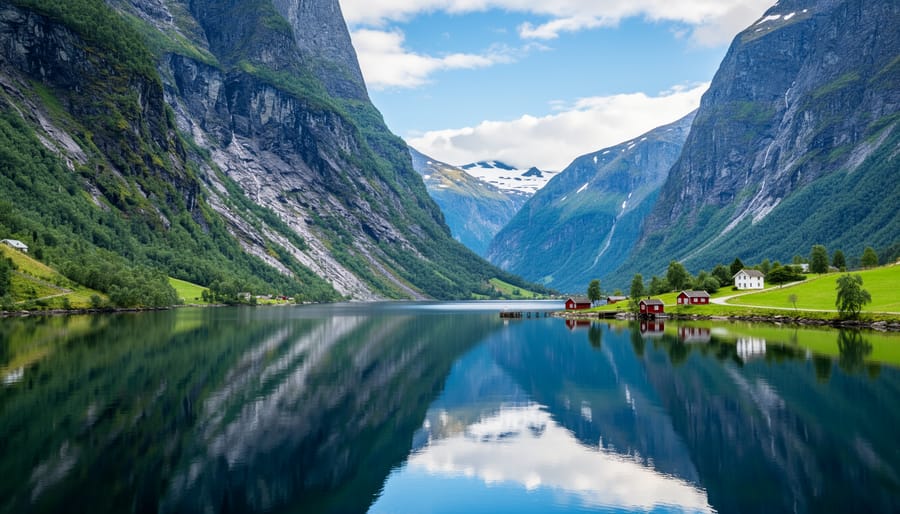
For those craving solitude and authenticity, Nordfjord offers a refreshing alternative to the popular fjord routes. Located about four hours north of Bergen, this stunning region remains blissfully quiet even during peak summer months. The journey itself rewards travelers with dramatic mountain passes and cascading waterfalls that you’ll often have to yourself.
Unlike the busier fjords closer to Bergen, Nordfjord provides genuine opportunities to connect with local communities. Small villages like Olden and Loen welcome visitors warmly without the infrastructure overwhelm found elsewhere. You can kayak pristine waters, hike to the breathtaking Briksdal Glacier, or simply enjoy a picnic beside turquoise lakes with barely another soul in sight.
Reaching Nordfjord requires more planning than quick day trips to Sognefjord, but this commitment filters out casual visitors. Consider renting a car or taking the express boat from Bergen, then staying overnight in family-run guesthouses where hosts share stories over homemade breakfast. This slower approach aligns perfectly with sustainable travel principles, allowing you to minimize your environmental footprint while maximizing cultural exchange. The effort invested in reaching these quieter fjords returns tenfold in memorable, meaningful experiences.
Seasonal Fjord Experiences
Each season transforms Bergen’s fjords into distinct experiences worth exploring. Summer (June-August) brings the magical midnight sun, with extended daylight perfect for evening cruises through Sognefjord’s serene waters. Autumn (September-October) paints the mountainsides in amber and gold, creating spectacular photo opportunities along Hardangerfjord’s orchards. Winter offers dramatic solitude, when snow-draped cliffs meet steel-blue waters and waterfalls freeze into crystalline sculptures—though some routes operate on reduced schedules. Spring (April-May) awakens the fjords with rushing waterfalls fed by melting snow and blooming fruit trees. Understanding these seasonal considerations helps you choose the experience that matches your travel style, whether seeking vibrant summer activities or peaceful winter reflection.
How to Explore: Transportation Options from Bergen
Fjord Cruises and Ferry Services
Navigating the fjords from Bergen offers two distinct experiences: the tourist-focused cruises and the authentic public ferries that locals rely on daily. Understanding both options helps you choose the right fit for your travel style and budget.
Public ferries operated by Norled and Skyss provide surprisingly scenic journeys at a fraction of cruise prices. These working vessels connect communities along Sognefjord and Hardangerfjord, carrying passengers, vehicles, and cargo. The Flåm-Gudvangen ferry route is particularly stunning, winding through UNESCO-protected Nærøyfjord’s narrow passages. Locals use these services for commuting, so you’ll experience genuine Norwegian life while enjoying dramatic scenery. Most routes require no advance booking for foot passengers, though arrive early during summer months.
Tourist cruises offer specialized commentary and scheduled photo stops. However, consider the emerging electric boat options that reflect Norway’s sustainability leadership. Companies like The Fjords and Brim Explorer operate silent, emission-free vessels on popular routes, minimizing environmental impact while providing intimate encounters with wildlife and waterfalls. These eco-friendly alternatives typically accommodate fewer passengers, creating a more peaceful experience.
Seasonal considerations matter significantly. Ferry schedules expand from May through September, with reduced winter services when daylight hours shorten. Book electric boat tours several weeks ahead during peak season, as their smaller capacity means they fill quickly.
Pro tip: combine both experiences. Use public ferries for long-distance travel between fjord towns, then splurge on a shorter electric boat excursion in particularly scenic sections. This approach balances budget consciousness with environmental responsibility while maximizing your fjord exposure.
The Iconic Bergen Railway and Norway in a Nutshell
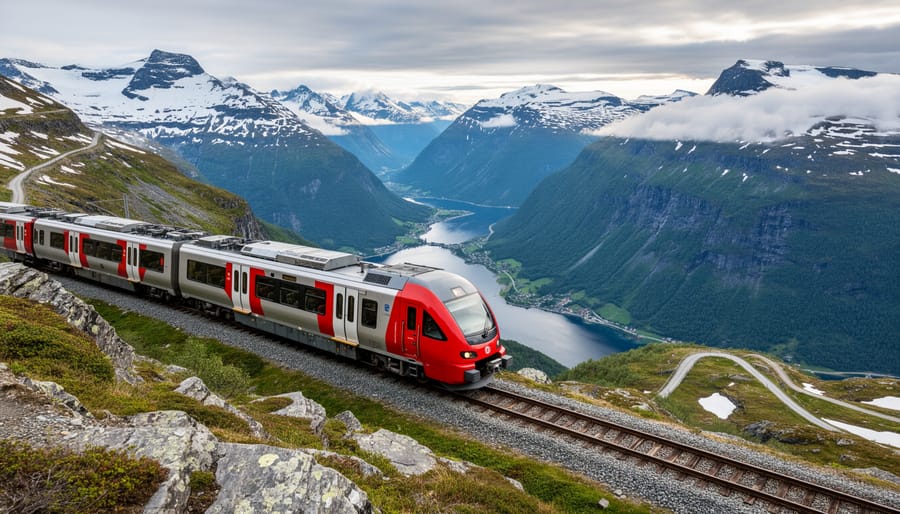
The Bergen Railway (Bergensbanen) ranks among the world’s most scenic train journeys, climbing from Oslo across the Hardangervidda mountain plateau before descending into Bergen. This engineering marvel offers panoramic views of fjords, waterfalls, and alpine landscapes while producing significantly fewer emissions than driving or flying—making it an excellent choice for environmentally conscious travelers.
The railway forms the backbone of the popular Norway in a Nutshell route, which combines train, bus, and ferry connections to showcase Norway’s most dramatic scenery in a single day. This circuit typically includes the spectacular Flåm Railway (Flåmsbana), dropping 2,838 feet through 20 tunnels, followed by a fjord cruise through Aurlandsfjord and Nærøyfjord—a UNESCO World Heritage site.
Booking strategies matter here. Reserve seats during summer months (June-August) well in advance, but consider shoulder seasons (May or September) for fewer crowds and competitive prices. Purchase tickets through Vy (the Norwegian railway) or specialized tour operators. The full route takes 12 hours round-trip from Bergen, though overnight stays in Flåm or Voss let you explore at a gentler pace while supporting local communities. Morning departures offer optimal lighting for photography and wildlife spotting along the journey.
Driving the Fjord Routes
Exploring the fjord routes by car offers unparalleled freedom to discover hidden viewpoints and charming villages at your own pace. Several rental agencies operate in Bergen, with many now offering electric and hybrid vehicles that align beautifully with Norway’s commitment to sustainability. Booking ahead, especially during summer months, ensures better rates and vehicle availability.
The National Tourist Routes, or Nasjonale Turistveger, provide exceptionally scenic drives with thoughtfully designed rest areas and viewpoints. From Bergen, the route to Hardangerfjord via the E16 and Route 7 takes you past cascading waterfalls and fruit orchards, while the journey to Sognefjord along the E39 and E16 showcases dramatic mountain passes. These routes feature excellent signage and well-maintained roads, though weather conditions can change quickly, particularly at higher elevations.
Ferry connections form an integral part of fjord driving, linking communities across waterways where bridges aren’t feasible. Routes like Lavik-Oppedal and Fodnes-Mannhjellar save considerable driving time while offering spectacular water-level perspectives. Most ferries accommodate vehicles and operate frequently, though booking ahead for longer crossings during peak season is wise.
Electric vehicle infrastructure has expanded significantly throughout the region, with charging stations available in most towns and at many tourist sites. This makes emission-free fjord exploration increasingly practical, reducing your environmental footprint while experiencing Norway’s pristine landscapes. Plan charging stops into your itinerary, particularly for longer routes through less populated areas.
Must-Experience Activities Around Bergen’s Fjords
Kayaking and Water-Based Adventures
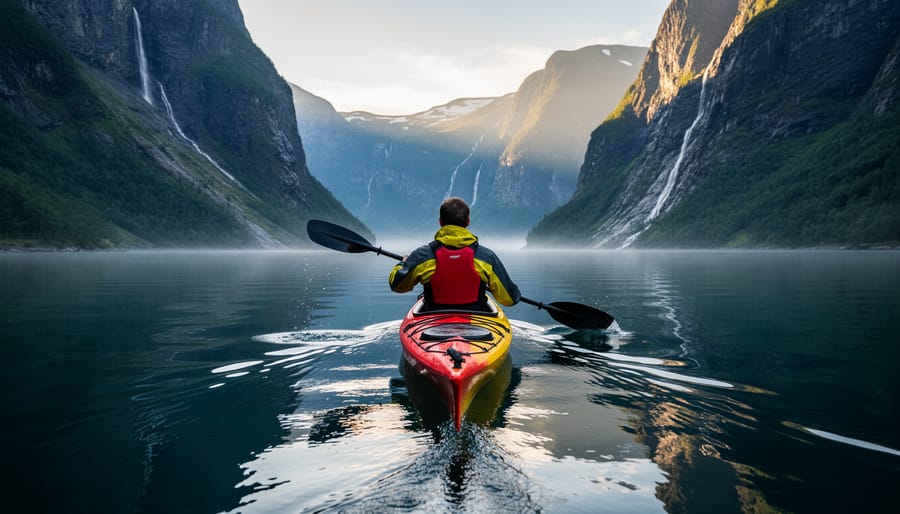
Paddling through the Norwegian fjords offers an intimate perspective you simply can’t achieve from land. Several operators in Bergen provide guided kayaking tours ranging from a few hours to multi-day expeditions, with routes designed for various skill levels. These excursions typically include all necessary equipment and instruction, making them accessible even if you’ve never kayaked before. Popular destinations include the calm waters of Osterfjord and the dramatic landscapes surrounding Mostraumen.
For a faster-paced adventure, consider a RIB (rigid inflatable boat) tour that combines thrilling speeds with stops at scenic viewpoints and waterfalls. These tours often venture into narrower fjord branches inaccessible to larger vessels, bringing you remarkably close to cascading water and towering cliffs.
During summer months, brave swimmers can find designated spots for a refreshing dip in the fjord’s chilly waters, though temperatures rarely exceed 15-18 degrees Celsius even in peak season.
When exploring by kayak or boat, maintain respectful distances from wildlife, particularly seals and seabirds. Avoid approaching nesting areas, and never feed wild animals. Choose operators committed to sustainable practices, including minimal-wake speeds near sensitive shorelines and adherence to protected marine areas. This ensures these remarkable ecosystems remain pristine for future generations.
Hiking from Fjord Floor to Mountain Summit
Bergen’s surrounding fjord landscapes offer exceptional hiking opportunities for all fitness levels, combining coastal beauty with dramatic mountain scenery. The region’s accessible trails make it remarkably easy to experience Norway’s iconic terrain, whether you’re traveling with young children or seeking a challenging summit adventure.
For families and casual walkers, the trails around Sandviksfjellet provide gentle ascents with rewarding fjord views within an hour’s walk. Mount Fløyen, reachable by funicular, offers several fjord hiking trails that loop back to the city, perfect for those wanting spectacular vistas without extreme elevation gain.
More ambitious hikers should consider Mount Ulriken (643 meters), Bergen’s highest peak, offering panoramic views across multiple fjords. The demanding trek to Trolltunga, though further afield, rewards experienced hikers with Norway’s most photographed rock formation.
Essential preparation includes layered waterproof clothing, sturdy hiking boots, and packed food, as mountain weather changes rapidly. Download offline maps beforehand, inform someone of your route, and respect marked trails to protect fragile alpine vegetation. Summer months (June-September) provide the longest daylight hours and safest conditions, though trails remain accessible year-round for winter-equipped adventurers.
Cultural Immersion in Fjord Communities
Beyond the dramatic landscapes, the fjord region offers genuine connections with communities who’ve thrived here for generations. Small villages like Undredal and Aurland welcome visitors to experience daily life shaped by mountains and water. These settlements, often accessible only by boat or narrow mountain roads, maintain traditions passed down through centuries.
Visit local farms producing artisanal cheeses, cured meats, and preserves using methods refined over generations. Many farmsteads, or gårder, offer tastings and demonstrate how they balance tourism with agricultural heritage. You’ll discover how goat cheese from Undredal earned its reputation or how families smoke salmon using techniques their ancestors developed.
These communities actively preserve their cultural identity while embracing sustainable tourism. Residents often speak English and genuinely enjoy sharing stories about fjord life, from fishing traditions to how they navigate harsh winters. Support their efforts by purchasing directly from producers, dining at family-run establishments, and respecting the slower pace of village life. These authentic encounters reveal how Norwegians maintain deep connections to their environment while welcoming thoughtful travelers.
Planning Your Bergen-Based Fjord Adventure
How Many Days Do You Need?
Your ideal duration depends on how much time you want to spend exploring Bergen versus venturing into the fjords. For a three-day visit, dedicate one full day to Bergen’s highlights like Bryggen and Fløyen, then take a day trip to Sognefjord or the popular Norway in a Nutshell circuit, leaving your final day for a more relaxed Bergen neighborhood exploration or the nearby Hardangerfjord.
A five-day itinerary offers better balance. Spend two days discovering Bergen’s museums, fish market, and mountain viewpoints, then embark on a two-day fjord adventure with an overnight stay in villages like Flåm or Balestrand. This allows you to experience the fjords during quieter evening and morning hours when day-trippers have departed. Use your fifth day exploring lesser-visited areas around Bergen, such as the scenic Mostraumen fjord or coastal islands.
For a week-long stay, you can truly immerse yourself in both city and nature. Three days in Bergen lets you experience its cultural offerings without rushing, while four days permits deeper fjord exploration, perhaps combining Sognefjord and Hardangerfjord visits or adding hiking excursions. This timeframe also supports more sustainable travel practices, reducing the need for rushed transportation and allowing for slower, more meaningful experiences in smaller communities along the fjords.
Where to Stay: Bergen vs. Fjord-Side Accommodation
Choosing where to base yourself depends on your travel style and priorities. Bergen offers urban convenience with excellent restaurants, museums, and public transport connections, making it ideal for families or those wanting city amenities between fjord adventures. You’ll find everything from boutique hotels in historic Hanseatic buildings to modern budget-friendly options near the harbor.
However, staying in smaller fjord-side communities like Flåm, Balestrand, or Eidfjord provides immediate access to nature and a more authentic Norwegian experience. Wake up to mountain views, enjoy quieter surroundings, and reduce your environmental footprint by minimizing daily transportation. Eco-lodges in these areas often employ sustainable practices like solar power and local food sourcing, aligning perfectly with responsible travel values.
Consider a split stay: start in Bergen to explore the city and organize fjord tours, then relocate to a fjord-side guesthouse or historic hotel for deeper immersion. Farm-stays (gårdstun) offer particularly memorable experiences, where you can connect with local families and support rural economies.
Fjord-side accommodation typically costs less than Bergen hotels, though options are more limited. Book well ahead during summer months, especially for eco-certified properties that prioritize sustainability. Remote locations may lack evening entertainment, but the trade-off is unparalleled tranquility and authentic cultural connections with communities that have thrived here for generations.
Budgeting and Money-Saving Tips
Let’s be honest: Norway consistently ranks among Europe’s most expensive destinations, and the Bergen fjord region is no exception. However, with thoughtful planning, you can experience this magnificent area without depleting your savings.
Budget-conscious travelers should consider visiting during shoulder seasons (May or September), when accommodation prices drop significantly and attractions remain accessible. Bergen’s many free experiences include hiking Mount Fløyen, exploring the historic wharf area, and wandering through charming neighborhoods. Pack your own lunch for fjord excursions rather than purchasing onboard meals, saving considerable kroner.
Mid-range travelers can balance costs by mixing splurge-worthy fjord cruises with budget-friendly public ferries and mixing restaurant meals with grocery store picnics. The Bergen Card offers free public transport and museum entry, providing excellent value for active explorers.
Even luxury travelers appreciate smart spending. Book accommodations and tours directly during off-peak periods, and consider embracing sustainable tourism practices like slower travel, which often reduces costs while deepening your connection to the landscape. Remember, Norway’s greatest treasures—pristine fjords, dramatic mountains, and crystalline waterfalls—cost absolutely nothing to admire.
Bergen and the Norwegian fjords represent more than just another travel destination—they offer something increasingly rare in our modern world: genuine connection with nature’s grandeur and centuries of maritime heritage. As you’ve discovered, Bergen serves this dual role beautifully, combining the cultural richness of a historic Hanseatic city with unparalleled access to some of Earth’s most breathtaking fjord landscapes.
Whether you spend three days or three weeks exploring this region, the experience tends to stay with travelers long after they’ve returned home. There’s something profoundly transformative about standing beneath towering cliffs that plunge into impossibly deep waters, or watching waterfalls cascade from heights that dwarf anything you’ve previously imagined.
As you plan your journey, remember that these landscapes and communities thrive when visitors approach them thoughtfully. Choose tour operators committed to environmental standards, respect local customs in smaller villages, and consider visiting during shoulder seasons when tourism pressure is lighter. The fjords have existed for millennia and will hopefully inspire travelers for millennia more—but only if we travel with care and intention.
The Norwegian fjords are calling, and Bergen is waiting to welcome you. Start planning your adventure with realistic expectations about weather, appropriate preparation for the activities you’ll pursue, and openness to the unexpected moments that often become the most cherished memories. Your fjord journey begins here.