
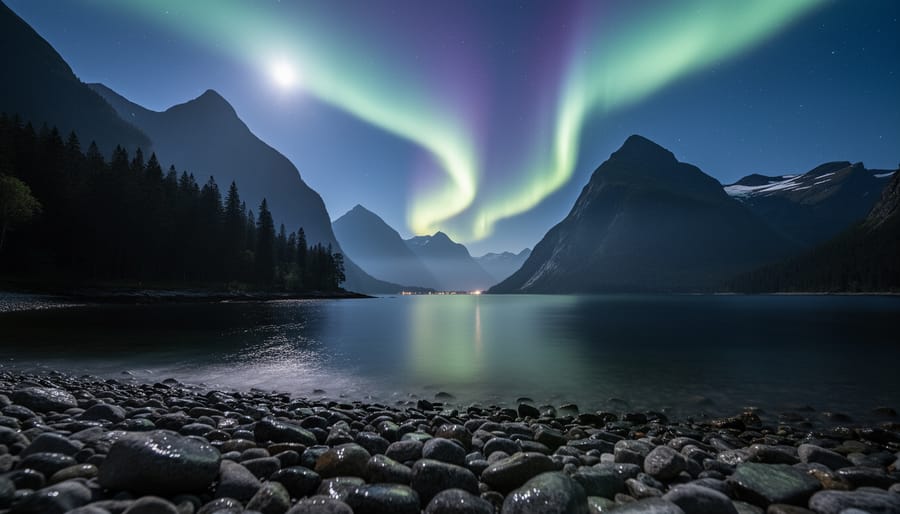
The best months to see the northern lights over Norwegian fjords are late September through late March, with the peak season running from October to February when dark skies align with aurora activity. This window differs slightly from inland locations because coastal weather along the fjords can be milder but cloudier, making clear-sky forecasting essential for your planning.
Understanding what makes a fjord helps explain why aurora viewing here offers something special. These dramatic coastal valleys, carved by ancient ice and flanked by steep mountains, create natural amphitheaters where the lights reflect off dark water. The effect is breathtaking, but it comes with trade-offs. Fjord regions sit closer to the warming Gulf Stream than inland areas, which means temperatures stay relatively comfortable (often hovering just below freezing) but cloud cover increases, particularly in autumn and early winter.
Your success depends on mobility and patience. Unlike fixed inland locations, fjord-based aurora chasing often requires driving or sailing to outrun weather systems moving in from the Atlantic. Popular fjord destinations like Lofoten, Tromsø’s surrounding waterways, and the quieter Lyngenfjord all offer excellent opportunities, though each has distinct seasonal patterns and accessibility considerations.
This guide walks you through the specific timing windows for different fjord regions, explains how weather and geography shift your odds throughout the season, and provides practical strategies for planning a trip that balances aurora viewing with sustainable exploration of these remarkable landscapes. You’ll learn which months offer the best combination of darkness and clear skies, how to read forecasts for coastal conditions, and where to position yourself for both iconic and lesser-known fjord viewpoints.
Quick Answer: Best Months for Northern Lights in the Fjords
The best time to see the northern lights in the Norwegian fjords runs from late September through late March, when darkness hours are sufficient for aurora viewing. December through February offers the longest nights and peak viewing opportunities, particularly in the northern fjord regions around Tromsø, Lyngenfjord, and Senja. October and March serve as excellent shoulder months, often bringing clearer skies and milder weather than the depths of winter.
While auroras can technically appear whenever the sky is dark enough and solar activity cooperates, practical viewing requires at least several hours of true darkness. This limits the realistic season in fjord regions, even those at higher latitudes. The midnight sun period (roughly May through July) makes aurora viewing impossible, and the bright nights of August provide only marginal darkness. By late September, darkness returns sufficiently for evening aurora watches, and conditions remain favorable through the equinox transition in March.
Weather patterns along Norway’s coast shift throughout the season, affecting your chances beyond just darkness hours. Autumn and spring often bring more stable atmospheric conditions and clearer skies compared to midwinter storm systems, though winter’s extended darkness means more opportunities to wait out passing clouds. Your specific fjord location matters too, northern fjords see auroras more frequently than southern ones, simply because they sit closer to the aurora oval’s typical position.
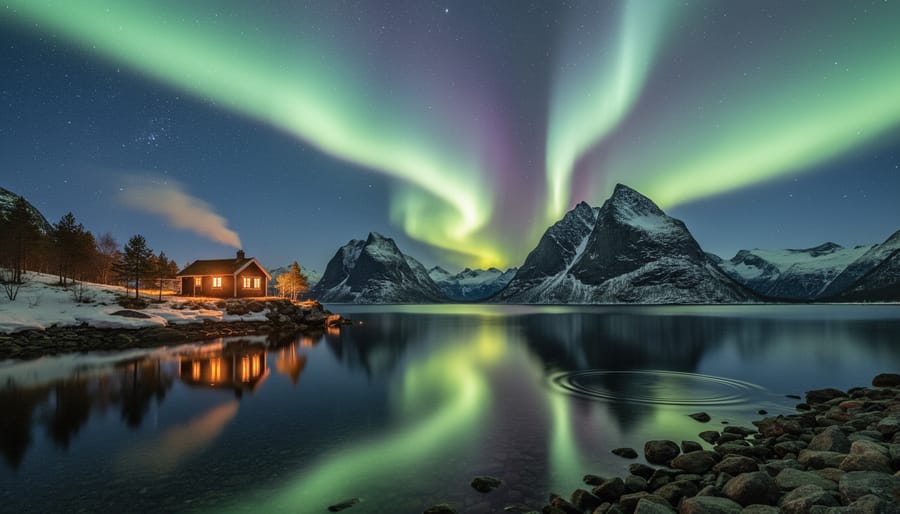
Northern Lights Timing Windows in Norwegian Fjord Regions
September to November: Autumn Aurora Season
The autumn months mark the return of aurora potential after the midnight sun period, with darkness gradually extending from a few hours in early September to near-total night by late November in northern fjord regions. This shoulder season brings distinct advantages: temperatures hover between -5°C and 5°C rather than the bitter cold of deep winter, making outdoor aurora watching far more comfortable for extended periods.
Fjord valleys display spectacular autumn colors, golden birch forests against dark mountains, creating stunning foreground interest for aurora photography when displays occur. Weather patterns during these months tend toward variability, with frequent Atlantic storms bringing cloud cover but also dynamic skies that can clear rapidly. September typically sees the most unpredictable conditions, while October and November offer increasingly stable cold spells.
Accommodation costs remain lower than peak winter rates, and popular viewing spots experience fewer crowds, giving you more space along fjord shores. Most tourist facilities stay fully operational through this period, though some seasonal fjord cruises begin reducing frequency by late November. Road conditions to fjord viewpoints generally remain manageable, with serious snow accumulation typically holding off until December in most regions.
December to February: Peak Winter Darkness
December through February represents the prime viewing window for northern lights over the Norwegian fjords, particularly in regions north of the Arctic Circle where polar night blankets the landscape in near-continuous darkness. During this period, Tromsø, Lyngenfjord, and surrounding areas experience only brief twilight around midday, giving you potentially 20+ hours daily to spot auroras when conditions align.
This extended darkness significantly increases your chances of witnessing displays, but winter’s intensity brings trade-offs. Coastal storms sweep through regularly, bringing snow, wind, and cloud cover that can obscure the sky for days. Temperatures typically range from -5°C to -15°C in fjord areas, though wind chill near the water makes it feel considerably colder.
Fjord conditions themselves become more challenging. Some smaller fjord roads close seasonally, ferry schedules reduce, and driving requires winter tires and caution on icy coastal routes. Yet for those prepared with proper clothing and flexible itineraries, this season offers the most dramatic combination: the aurora’s dance above snow-draped mountains and frozen fjord edges, all framed by deep winter darkness that makes even moderate displays vivid against the black sky.
March to Early April: Late Season Opportunities
The late winter-spring transition offers an appealing middle ground that many visitors overlook. By March, you’ll find between six and eight hours of darkness in northern fjord regions, significantly less than midwinter, but still plenty for aurora hunting. The real advantage? Weather patterns shift as spring approaches, bringing more stable conditions and fewer coastal storms that plague earlier months.
This period presents a practical compromise. Daytime temperatures climb above freezing in most fjord areas, making outdoor exploration more comfortable. You can spend daylight hours hiking to viewpoints or taking fjord cruises to appreciate landscapes that remain hidden during the perpetual darkness of December and January. Then, as darkness falls around 10 PM in early March (shifting to midnight by early April in northern locations), you can watch for auroras against snow-draped mountains still bathed in lingering twilight.
Accommodation rates typically drop after Easter, and popular viewing spots grow quieter as the main winter season winds down. The combination of improving conditions, uncrowded locations, and the novelty of blue-hour aurora displays makes late March particularly worthwhile for photographers seeking something beyond the standard midwinter aurora shot.
Factors That Shift Northern Lights Timing and Visibility
Solar Activity and the 11-Year Cycle
The sun’s 11-year solar cycle directly influences how often and intensely auroras appear over the fjords. During solar maximum, when the sun’s magnetic activity peaks, coronal mass ejections and solar flares become more frequent, triggering stronger and more regular northern lights displays. Solar minimum brings quieter conditions, meaning fewer auroras and weaker displays that might not be visible as far south as some fjord regions.
The current cycle reached solar maximum in late 2024, with elevated activity expected to continue through 2026 and into 2027. This means fjord visitors during this period have better odds of witnessing auroras compared to the solar minimum years of 2018-2020. However, solar activity alone doesn’t guarantee viewing success. Even during maximum, you still need darkness, clear skies, and auroras directed toward Earth’s magnetic field. Conversely, during solar minimum, strong displays can still occur, they’re just less frequent.
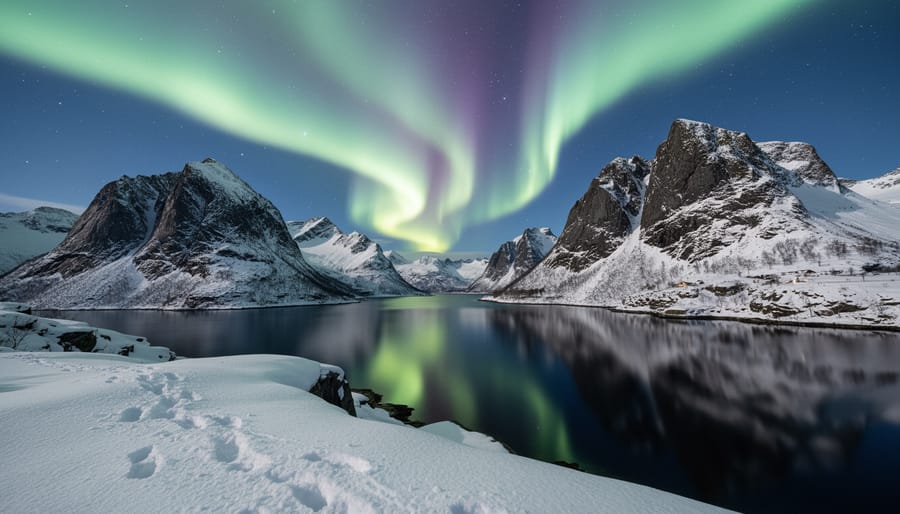
Weather Patterns Along the Coast
Norway’s coastal climate presents both challenges and surprises for aurora hunters. The Gulf Stream keeps fjord regions considerably milder than inland areas at similar latitudes, but this warmth also brings moisture and cloud cover. Coastal storms, particularly between November and February, can arrive suddenly from the Atlantic, blanketing entire fjord systems for days. These weather systems move quickly though, and clearings often follow within 24 to 48 hours.
The ancient ice-carved valleys create dramatic microclimates along their lengths. Outer coastal sections catch maritime weather first, while inner fjord branches sheltered by mountains can remain surprisingly clear even when the coast is socked in. This topographic effect works both ways: fog can pool in narrow valleys while nearby peaks enjoy crystal skies.
Northern fjords around Tromsø and Lyngen generally see clearer conditions than southwestern regions like Sognefjord, where Atlantic systems stall longer. Lofoten benefits from its position jutting into open water, where winds disperse clouds more readily. Check multiple weather stations along your chosen fjord rather than relying on coastal forecasts alone.
Location Within the Aurora Oval
The aurora oval, a ring-shaped zone where northern lights activity concentrates, sits roughly 10 to 20 degrees from the magnetic North Pole, shifting southward during strong geomagnetic storms. Norway’s fjord regions span a wide latitude range, creating significant differences in aurora frequency.
Northern fjords in Troms and Finnmark counties (around 69°N to 71°N) sit directly beneath the aurora oval’s typical position during moderate activity. Lyngenfjord, Ullsfjord, and coastal areas near Tromsø experience auroras on roughly 80-100 clear nights per season. These locations don’t need exceptional solar activity to produce displays, they’re simply in the right spot.
Mid-Norway fjords around Lofoten and Bodø (67°N to 68°N) sit slightly south of the primary belt. They still offer excellent viewing during average conditions, though perhaps 60-80 nights per season.
Southern fjord regions like Sognefjord and Hardangerfjord (60°N to 61°N) lie well south of the typical oval. They’ll catch auroras only during stronger geomagnetic storms (KP 4+), making sightings less reliable for short visits. If your trip centers specifically on aurora viewing, prioritize northern locations.
Choosing Your Fjord Base for Northern Lights Viewing
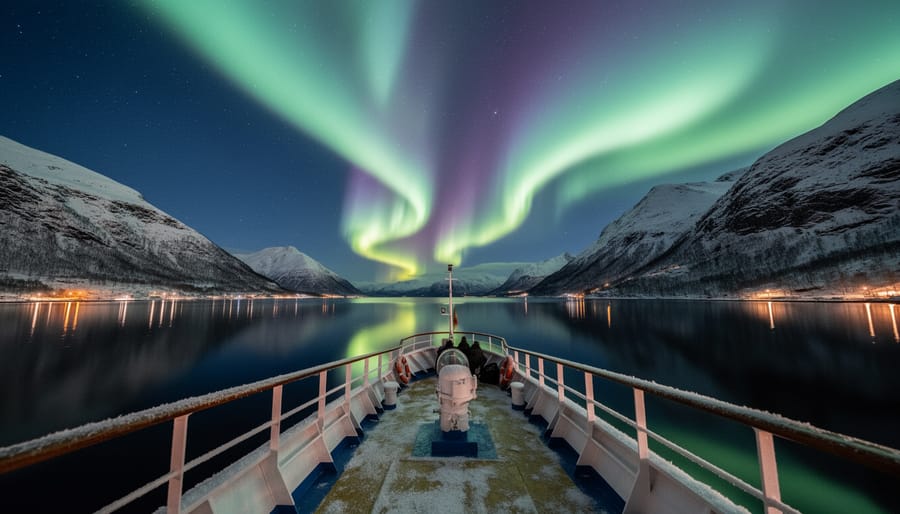
Northern Fjords: Maximum Aurora Opportunity
The northern fjords of Troms county sit squarely beneath the aurora oval, giving you the highest statistical chance of seeing the lights on any given clear night. Tromsø serves as the natural gateway, with direct flights from Oslo and several European cities, making these fjords surprisingly accessible despite their Arctic location.
Lyngenfjord, about 90 minutes from Tromsø, offers dramatic alpine scenery plunging into deep water, a stunning backdrop when auroras appear. The small villages of Lyngseidet and Nordlenangen provide authentic bases with local guesthouses and fewer crowds than Tromsø itself. Ullsfjord, closer to the city, gives you similar mountain-meets-water landscapes with even less development.
While Tromsø has excellent infrastructure and guided tours, the city’s light pollution diminishes the aurora experience. Consider staying in fjordside villages and making day trips to Tromsø for museums and restaurants. This approach supports smaller communities while giving you darker skies. The fjords here freeze partially in deep winter, creating unique ice formations that add another dimension to aurora photography. Between late September and early April, you’re looking at 60-80% chance of activity on clear nights, significantly higher than anywhere further south.
Mid-Norway Fjords: Balancing Access and Experience
Mid-Norway strikes a sweet spot for travelers seeking northern lights without venturing to the Arctic extremes. Bodø, positioned just above the Arctic Circle, serves as an excellent fjord base in Norway with daily flights from Oslo and relatively mild coastal weather. The city’s surrounding fjords see auroras on roughly 60-70% of clear winter nights during peak season, though you’ll experience fewer displays than Tromsø’s 80-90% rate.
Narvik offers dramatic fjord scenery framed by steep mountains, with the bonus of accessible wilderness areas for escaping light pollution. The town’s protected position within Ofotfjorden creates surprisingly stable weather windows between coastal storms.
The Lofoten and Vesterålen archipelagos present perhaps mid-Norway’s most photogenic aurora settings. Here, jagged peaks rise straight from the sea, creating stunning foreground compositions when the lights appear. Islands like Senja remain far less crowded than Lofoten’s southern villages, offering authentic fishing community experiences alongside your aurora chase. These island chains experience strong geomagnetic activity roughly 40-50 nights per winter, making patience and flexible schedules essential for success.
Southern Fjords: Occasional Viewing During Strong Displays
The southwestern fjords, Sognefjord, Hardangerfjord, and Lysefjord, sit at latitudes (around 60°N) where auroras appear only during exceptional geomagnetic storms, typically those rated KP 6 or higher. If you’re staying near the Bergen fjord gateway or further south, treat any northern lights sighting as a bonus rather than the trip’s focus. These regions shine for their dramatic scenery, waterfalls, and cultural heritage, but aurora frequency is too unpredictable for dedicated viewing. During strong solar events, perhaps once or twice per season, displays can reach this far south, but you’ll need both clear skies and fortunate timing, making northern fjord regions the smarter choice if auroras are your priority.
Planning Your Aurora-Fjord Experience Responsibly
What to Pack and How to Prepare
Layering is your best defence against the cold, damp air that sweeps across fjord landscapes during winter nights. Start with thermal base layers made from merino wool or synthetic moisture-wicking fabric, add an insulating mid-layer like fleece or down, and top with a windproof, waterproof shell jacket. The fjords channel wind directly off the water, making it feel significantly colder than inland locations at the same temperature.
Pack insulated, waterproof boots with good traction for potentially icy ground, along with thick wool socks, warm gloves (bring a spare pair), and a proper winter hat that covers your ears. A neck gaiter or balaclava helps when temperatures plummet below -15°C.
For photography, bring extra camera batteries, cold drains them quickly, and keep spares warm against your body. A sturdy tripod is essential for long exposures, and a red-light headlamp preserves your night vision while not disrupting others. Hand warmers tucked into pockets provide welcome relief during long waits, and a thermos of hot tea or coffee makes the experience far more comfortable.
Sustainable Aurora Chasing in Fjord Communities
The surge in northern lights tourism has strained some fjord communities, particularly around Tromsø where convoys of rental cars crowd popular viewpoints during peak season. You can help by choosing guided tours run by local residents who know respectful viewing locations and contribute economically to their communities. Many smaller fjord villages offer excellent aurora access without the crowds, consider staying in places like Sommarøy, Kåfjord, or Manndalen rather than adding to the pressure on Tromsø’s infrastructure.
Respect quiet hours in residential areas, typically after 23:00. Don’t idle your car engine for warmth at roadside spots, as noise carries across fjord waters to nearby homes. If you’re driving independently, use designated parking areas and avoid blocking farm roads or private driveways. Pack out all rubbish and avoid trampling snow-covered vegetation when setting up cameras.
Support sustainability by booking accommodation and meals in the smaller communities where you’re viewing, not just using them as free viewing platforms while staying in larger towns. Many family-run guesthouses and local guides offer more authentic experiences while directly benefiting fjord residents.
Combining Auroras with Other Fjord Experiences
Chasing auroras shouldn’t define your entire fjord journey. During daylight hours, take advantage of the stunning winter landscapes with activities that make the trip rewarding regardless of whether the lights appear. Daytime fjord cruises offer incredible views of snow-capped peaks and frozen waterfalls without the crowds of summer. Winter hiking along accessible trails provides exercise and fresh perspectives on the fjord scenery, while snowshoeing or cross-country skiing opens up terrain that’s inaccessible in other seasons. Visit local museums to understand Sámi culture and coastal heritage, or warm up in traditional cafés where you can chat with residents about life in fjord communities. Book a fishing excursion or try whale watching in northern waters. This balanced approach to winter fjord travel ensures you’ll return home with rich memories even if clouds obstruct the auroras, and it supports local economies beyond the aurora tourism rush.
Frequently Asked Questions
Can you see the northern lights in the Norwegian fjords during summer?
No, the midnight sun from late May through July means there’s insufficient darkness for auroras to be visible, even though they’re technically occurring. You need proper darkness, which begins returning in late August, with reliable viewing starting mid-September.
How long do northern lights displays typically last over the fjords?
Displays vary dramatically, from fleeting 10-minute appearances to all-night shows lasting several hours. Most moderate displays last 30 minutes to two hours with varying intensity, which is why patience and flexibility in your schedule matter more than pinpointing an exact viewing time.
Do I need to book a tour, or can I see the northern lights independently?
You can absolutely view them independently if you have transport and knowledge of dark-sky locations away from fjord-side villages. Tours offer advantages like experienced guides who monitor forecasts, transport to optimal spots, and photography assistance, but they’re not essential if you’re comfortable navigating winter conditions.
What should I do if the aurora forecast is poor during my fjord visit?
Embrace the other experiences the fjords offer rather than fixating solely on auroras. Many visitors report that fjord cruises, mountain hikes, local museums, and coastal village exploration become the highlights of their trip, with any aurora sighting as a bonus rather than the sole measure of success.
These questions reflect concerns that come up repeatedly when travellers plan fjord-based northern lights trips. The summer question especially matters because many people don’t realize that Norway’s extreme northern latitude means the very factor that creates midnight sun makes summer aurora viewing impossible, not just unlikely.
The forecast question deserves particular emphasis. Even during peak season in ideal locations, cloud cover, storms, or simply low solar activity can mean no visible displays for several consecutive nights. Building your itinerary around daytime fjord activities with evening aurora attempts, rather than the reverse, creates a far more satisfying trip. This approach aligns with sustainable travel practices too, as it encourages deeper engagement with local culture and landscapes instead of single-purpose aurora chasing that puts pressure on limited viewing locations.
Independent viewing works well for confident travellers with rental cars who’ve researched dark spots along fjord roads, while tours suit those unfamiliar with Norwegian winter driving or wanting expert interpretation of what they’re seeing in the sky.
aftercare
Seeing the northern lights over Norwegian fjords creates memories that last a lifetime, but the experience doesn’t end when you return home. Take time to organize your photos and videos while the details are still fresh, you’ll want to remember which fjord location yielded that spectacular display or where you stood when the auroras first appeared. Consider sharing your experiences thoughtfully on social platforms, crediting local guides and accommodations that made your trip special, and offering honest insights that might help future visitors plan more sustainably.
If the auroras didn’t cooperate during your visit, remember that the fjords themselves offered their own magic. Many travelers find themselves planning return trips, either to chase the lights again or to experience the same fjord regions during the midnight sun months. Keep following aurora forecasting resources and solar activity news, you’ll start recognizing patterns and may spot opportunities for future visits during particularly active periods. The northern lights have a way of calling people back.
Key Points
The ideal aurora viewing window in Norwegian fjords runs from late September through late March, with peak darkness occurring December through February in northern regions.
- Northern fjords near Tromsø and Lyngenfjord offer the highest aurora frequency due to their position within the aurora oval and extended polar night periods.
- Solar activity cycles significantly impact aurora intensity, with 2026 falling near solar maximum, creating favorable conditions for strong displays.
- Coastal weather patterns along fjord regions can be unpredictable, making flexible travel dates and backup locations essential for success.
- September through November provides milder conditions and autumn colors, while March offers improving weather with dramatic snow-covered fjord scenery still intact.
- Southern fjords like Sognefjord and Hardangerfjord occasionally see auroras during powerful geomagnetic storms but shouldn’t be primary destinations for aurora-focused trips.
- Sustainable aurora viewing means respecting local communities, avoiding overcrowded hotspots during peak hours, and supporting businesses in lesser-visited fjord villages.
- Combining aurora pursuits with daytime fjord activities creates a rewarding trip even if the lights don’t cooperate on every evening.
Planning around these core factors while maintaining realistic expectations transforms your fjord aurora adventure from a single-focus gamble into a rich northern experience where the lights become a spectacular bonus rather than the sole measure of success.
Timing your Norwegian fjords adventure for northern lights involves equal parts planning and flexibility. While September through March offers your best window, with December to February providing maximum darkness, no calendar date guarantees an aurora show. Solar activity fluctuates, coastal weather brings unpredictable cloud cover, and even perfect conditions require some patience. Build your itinerary around the optimal months, yes, but leave room to adapt when you arrive.
Set realistic expectations before you book. The aurora remains a natural phenomenon that dances to its own rhythm, not tourist schedules. Many visitors spend several nights watching the sky before witnessing their first display. Others strike out completely but leave captivated by the fjords themselves, the way morning light catches jagged peaks, how waterfalls freeze mid-cascade, the profound quiet of a winter fjord valley under stars.
That’s the real beauty of choosing fjord regions for your northern lights pursuit. The landscape delivers wonder whether or not the sky cooperates. You’re not gambling everything on a single experience.
As you plan, consider your impact on these fragile coastal communities. Spread your nights between popular hubs and lesser-visited fjord villages. Hire local guides who know both the best viewing spots and the stories behind the mountains. Respect the darkness that makes auroras visible, for locals trying to sleep and for preserving the magic for future travelers.
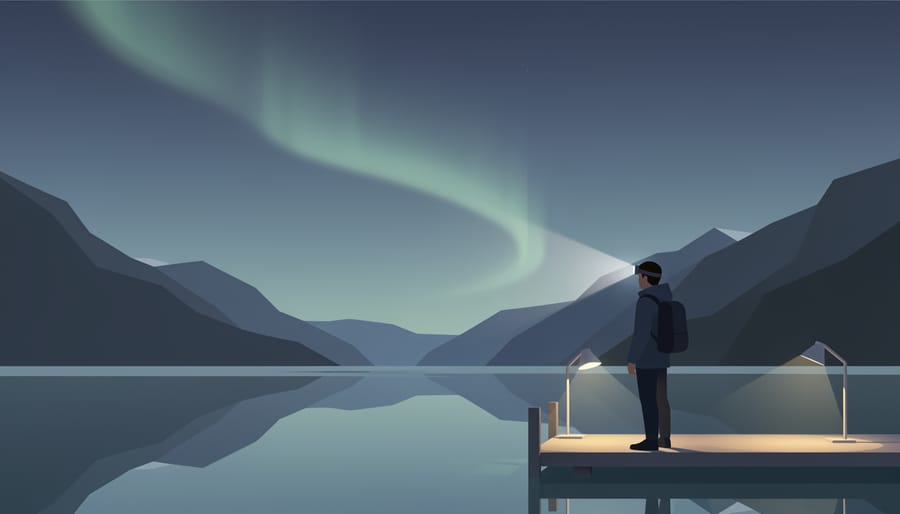
When those green curtains finally shimmer across black water, reflecting off glassy fjord surfaces with snow-capped peaks as your frame, you’ll understand why this combination ranks among nature’s most extraordinary spectacles.