
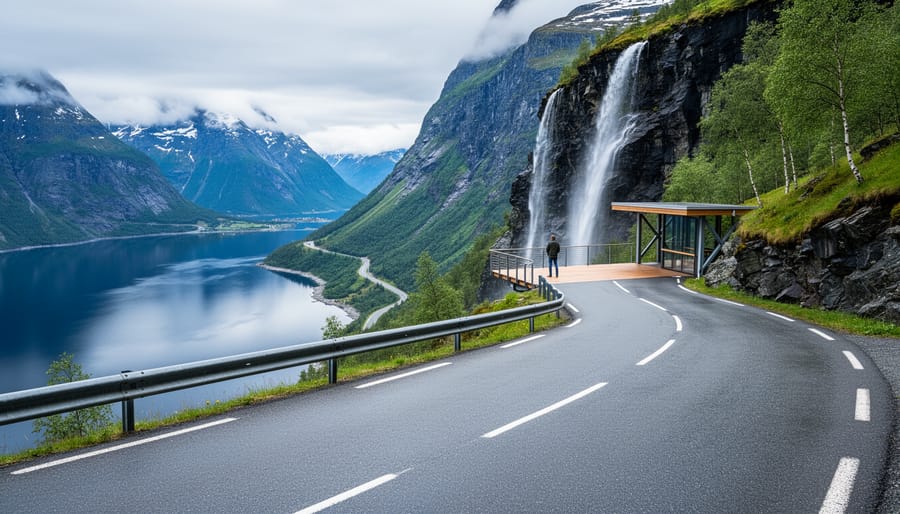
The best scenic drives in Norway are the 18 National Tourist Routes, a state-designated network of roads picked for their landscapes, viewpoints and architecture, and eight of them are enough to cover the country from the southern coast to the Arctic. Most run from late May or June to September, when the high mountain passes are open. Some need ferry crossings, many are toll-free, and nearly all reward slow driving with frequent stops.
Norway rewards the unhurried driver. Expect hairpin bends climbing out of fjord valleys, waterfalls beside the tarmac, and viewing platforms built with real care for the terrain. The famous routes through the western fjords, which you can reach from the Bergen fjord gateway, are worth every minute. But the quieter choices, like the open plateau of Valdresflye or the steep island coastline of Senja, often leave a deeper impression with far fewer cars.
Below you’ll find eight routes, each matched to its region, with notes on seasons, ferries, tolls and driving rules. We’ve also added tips for traveling lightly on the landscape, because these roads pass through fragile places and small communities that depend on thoughtful visitors.
Why Norway’s Scenic Drives Are Worth the Trip: Overview and What Makes a Route Special
Driving gives you something trains and tour buses rarely do: the freedom to stop wherever the view demands it. In Norway, that matters. The landscape changes every few kilometres, and the best moments are often a gravel pull-out above a waterfall or a quiet bend beside a mountain lake.
The backbone of Norwegian road-trip travel is the National Tourist Routes (Nasjonale turistveger). This program, run by the Norwegian Public Roads Administration, designates 18 stretches of road for their scenery and then invests in them. That means purpose-built viewing platforms, thoughtfully designed rest areas, picnic spots, and toilets that blend into the terrain rather than fight it. Many of these structures are works of architecture in their own right, so even a ten-minute stop feels considered.
The routes also stitch together the country’s regions. One drive might carry you from a deep fjord to a high mountain plateau, while another hugs an exposed coastline and hops between islands. If you’re curious about what makes a fjord so dramatic, driving alongside one is the best classroom you’ll find.
How we chose the routes below. We looked for variety of landscape, a spread across Norway’s scenic regions, and reasonable accessibility for ordinary drivers. We also favoured routes that reward travelers who go slowly and linger in smaller communities, so the list mixes famous names with a few lesser-known options.
Eight Scenic Drives Across Norway’s Regions
1. Atlanterhavsveien (The Atlantic Road)
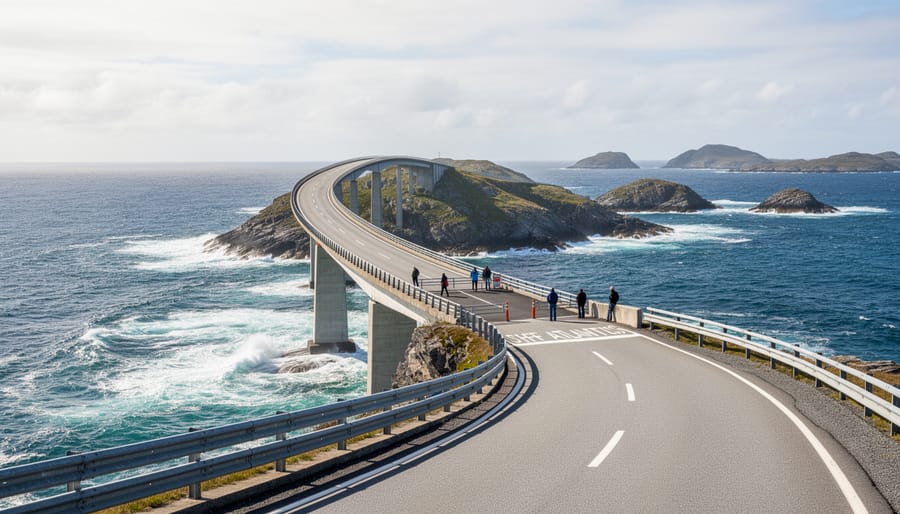
The Atlantic Road, or Atlanterhavsveien, is one of the shortest National Tourist Routes and one of the most photographed. It runs about eight kilometres through Møre og Romsdal, linking small islands and skerries with a string of bridges that seem to rise and dip over open sea. The best known is Storseisundet Bridge, whose curve makes it look as though the road simply ends in the air.
Because the drive takes only ten or fifteen minutes, the real question is how to spend your time here. The weather is the draw. On a calm day the water is glassy and the light is soft. When a storm rolls in from the Norwegian Sea, waves break over the rocks and sometimes spray the road itself. Check the forecast and the road authority’s updates, and don’t stand close to the water’s edge when the sea is rough.
Skip the drive-through and park instead. Several viewing areas and rest stops have been built for this purpose, and a footpath and a raised walkway let you step out over the rocks and listen to the surf. Wear a windproof layer even in summer, because the wind off the coast can be sharp. Fishing spots dot the shore too, so you will often see locals casting a line.
Pair the road with a slower detour. The nearby coastal villages are quieter and give you a better feel for island life than the main stops do. Lingering over a coffee or a fish lunch in one of them also spreads your spending beyond the busiest car parks.
2. Geirangerfjellet and Trollstigen (Geiranger, Trollstigen)
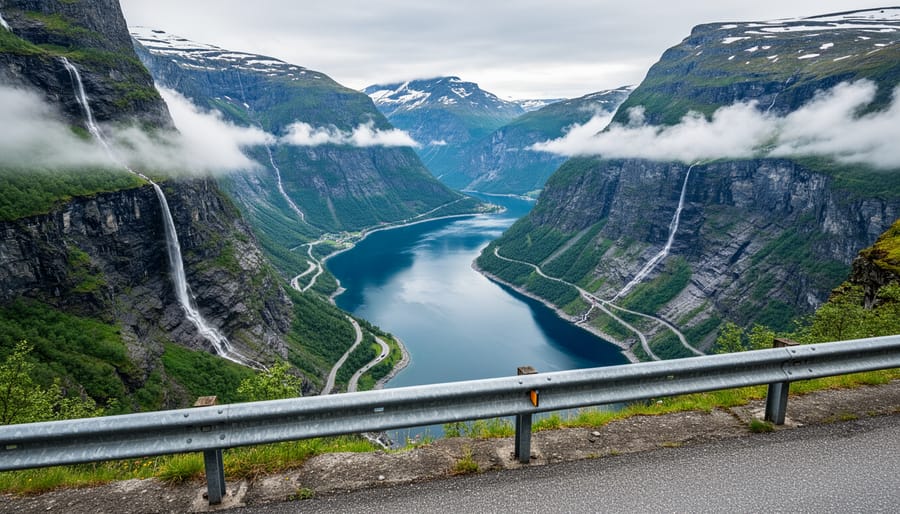
Few drives pack as much drama into so little distance as the Geiranger, Trollstigen route, which sits in the heart of Fjord Norway. The road climbs in tight hairpin bends, and the Ørnesvingen, or “Eagle Bend,” lookout near the UNESCO-listed Geirangerfjord gives a sweeping view down to the water and the waterfalls tumbling off the cliffs, including the Seven Sisters. Further along, the Trollstigen (“Troll’s Ladder”) zigzags up its mountainside with eleven hairpins, ending at a viewing platform built over the valley. Take your time here. Pull-outs are frequent, and the best views are usually a short walk from the car.
Both mountain sections are seasonal. They typically open in late spring, once the snow has been cleared, and close again in autumn, but the dates shift from year to year. Check the live road status with Statens vegvesen, Norway’s public roads authority, before you commit to this route.
Ferries add a pleasant rhythm to the trip. The short crossing between Hellesylt and Geiranger lets you see the fjord from the water rather than the road, and it gives drivers a break from the bends.
Geiranger gets crowded when cruise ships are in port, usually from mid-morning to late afternoon. Arrive early or stay overnight so you can have the viewpoints to yourself in the evening light. Travelling in the shoulder months, when the road is open but the crowds are thinner, also eases pressure on this popular spot.
3. Sognefjellet (Sognefjellsvegen)
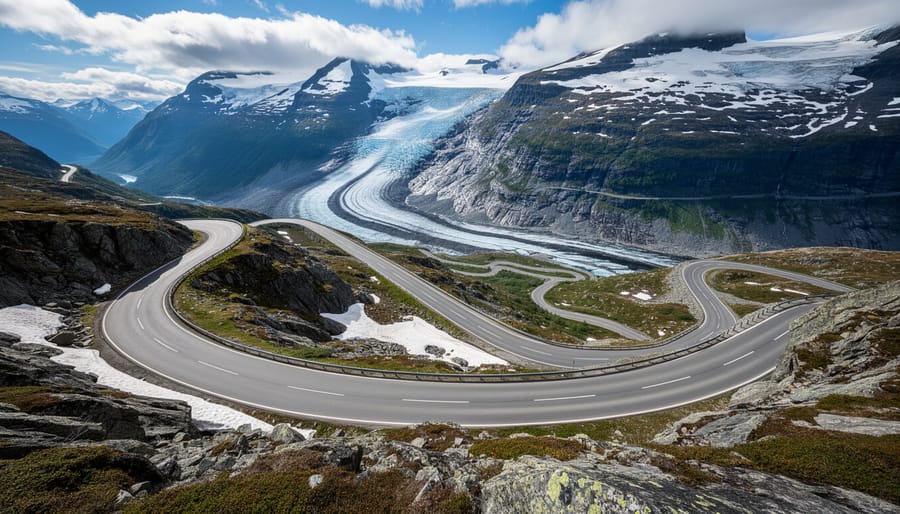
Sognefjellet is the route for anyone who wants Norway at its most raw. The road climbs from the farming valley around Lom up to roughly 1,430 metres, making it the highest mountain pass road in Northern Europe, before dropping toward the Sognefjord at Luster. The scenery changes fast. Birch forest gives way to bare rock, snow patches and tiny tarns that stay frozen well into early summer.
The high plateau feels almost lunar, and it sits right beside Jotunheimen National Park, home to many of Norway’s tallest peaks. Glaciers glint along the ridgelines, and on a clear day the views stretch for miles with barely a building in sight. Pull over at one of the roadside stops and you’ll often hear nothing but wind and meltwater.
Because the pass is so exposed, weather can turn quickly, so pack a warm layer even in July. The road also closes in winter, usually reopening in late spring, so check current conditions with Statens vegvesen before you set out.
Slow down at the farm end of the drive. Around Lom and the lower valleys, small mountain farms and cafés serve waffles, local cheese and coffee, a good way to put money straight into the community. Linger over a cup, let the thin air settle, and treat the drive as the destination rather than a way to get across.
4. Hardanger (Hardangervegen)
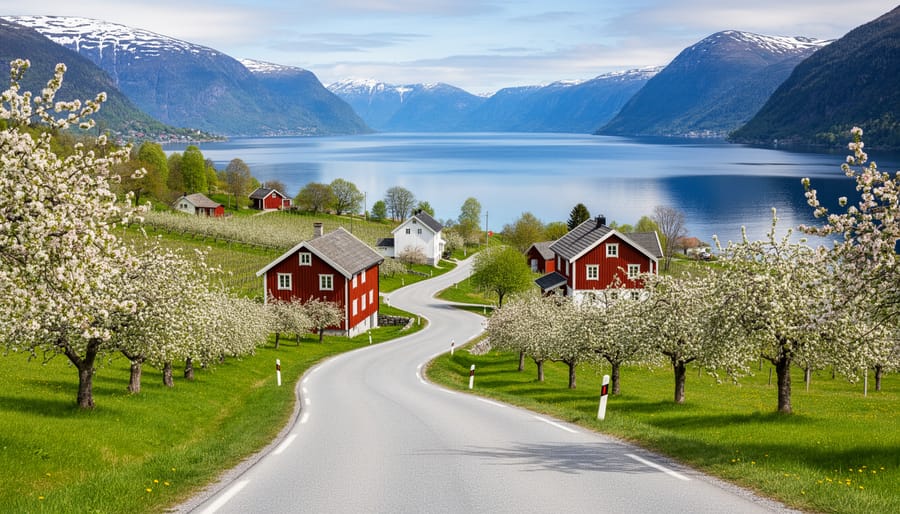
Hardanger is gentler than most of Norway’s famous drives, and that’s part of its charm. Hardangervegen follows the shores of Hardangerfjord through orchard country, in the Fjord Norway region, where slopes of apple, pear, plum and cherry trees tumble right down to the water. Come in mid-to-late May and the blossom turns the whole fjord-side white and pink, with snow still clinging to the peaks above. The exact timing shifts with each spring’s weather, so check locally before you plan around it.
The Hardanger Bridge is the headline structure, a long suspension span high above the fjord that carries you across in a couple of minutes. It’s worth pulling over at a viewpoint on either side to appreciate the scale, rather than simply driving over.
The real pleasure is slowing down in the small villages. Many farms along the route sell fruit, juice and cider straight from the farm shop, and buying here puts money directly into the communities that tend these orchards. Look for roadside stands in summer and early autumn, when the harvest is at its best. Cider is a local specialty, and tasting rooms are often small, family-run affairs where you can ask how the fruit is grown.
Hardanger also has a strong cultural heritage, from its distinctive fiddle tradition to the Hardanger embroidery you’ll spot in local craft shops. Give yourself time to wander a village or two, and let the day stretch out.
5. Valdresflye
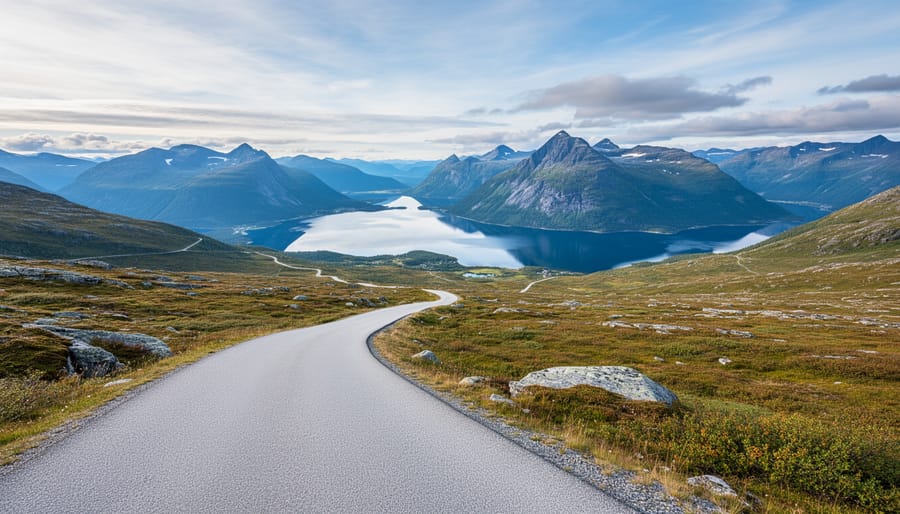
Valdresflye is the road for travelers who want big mountain space without the crowds. It is a high-plateau drive in the Valdres region of the central mountains, and it runs along the northern edge of Jotunheimen National Park. The route climbs above the tree line, where the landscape opens into wide, rolling fjell (mountain plateau) dotted with small tarns, boulders and patches of late snow.
The road crosses between Bygdin and Gjendesheim, and the scenery shifts as you go. Lake Bygdin stretches out in long, cold blue, and the Jotunheimen peaks line the horizon. You don’t need to be a serious hiker to enjoy it. Short, easy walks start from pull-outs and car parks along the way, so you can step out, stretch your legs and take in the silence before moving on.
The Valdresflye viewpoint is a good first stop, with a short path leading to sweeping views over the plateau. If the weather is clear, give yourself time to linger. Conditions up here change quickly, so bring a warm layer even in summer, and pack a flask and some food, since services are sparse.
Because this high road is closed in winter, it is usually open only from late spring or early summer, depending on snow. Check the current status with Statens vegvesen before you set out. Traveling here also spreads visitors away from the busiest fjord routes, which suits slow, low-impact road tripping.
6. Helgelandskysten (Helgeland Coast)
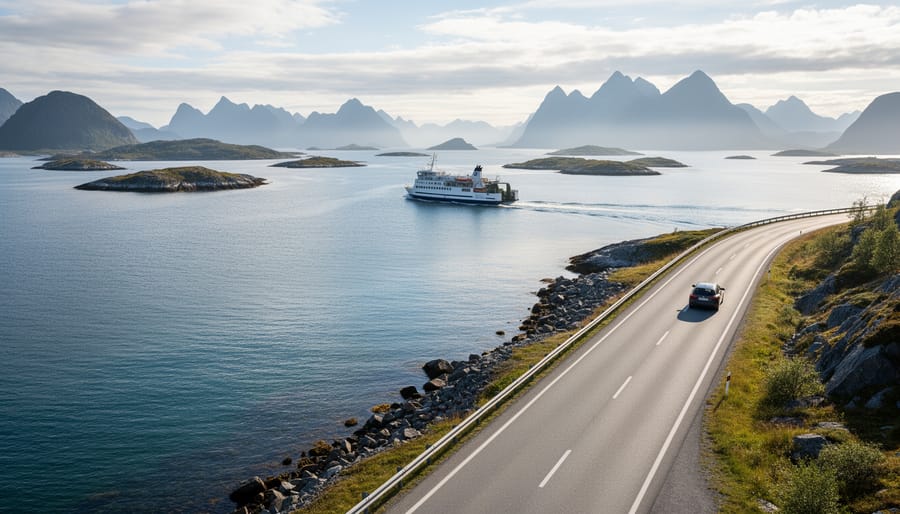
The Helgeland Coast, or Helgelandskysten, is the drive for people who like the journey to set its own pace. Running through Nordland in northern Norway, this National Tourist Route follows Fv17 (county road 17) and threads together mountains, islands and open sea. What really defines it is the ferry rhythm. Several crossings link the mainland to the islands, so your day is shaped by timetables, not just distance. Check sailing times before you set off, and treat each wait as a chance to stretch your legs, watch the seabirds or drink a coffee on deck.
Along the way you’ll cross the Arctic Circle, marked by the Polarsirkelen sign and a visitor centre on the nearby mountain plateau. Stopping there feels like a small milestone, a gentle reminder that you’ve truly entered the north.
The scenery changes constantly. Jagged peaks drop straight into the water, scattered skerries glint in the long northern light, and the famous Seven Sisters mountain range rises above the coast. Small fishing communities appear between the crossings, many with a local café or a quiet harbour worth lingering in.
This route suits slow, low-impact travel because it rewards unhurried days. Fewer miles covered means less fuel burned, more time in village shops and a lighter footprint overall. Give yourself several days, and let the ferries decide when to move on.
7. Lofoten (Kystriksveien Alternatives and the Lofoten Islands Road)
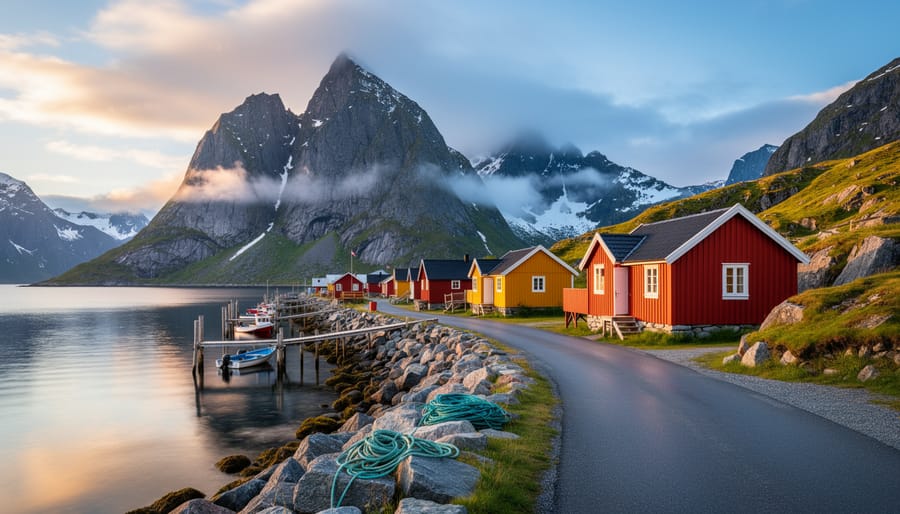
The E10 is the spine of Lofoten, running from the island of Austvågøy in the east down through Vestvågøy, Flakstadøy and Moskenesøya to the village of Å at the very end of the road. It sits in the Arctic North, and the scenery looks improbably dramatic for its latitude: granite peaks rising straight out of the sea, white-sand beaches, and red rorbuer (traditional fishermen’s cabins on stilts) lining the harbours. Bridges and short tunnels link the main islands, so you can drive the whole stretch without a ferry. Allow at least three days.
Look out for Haukland and Uttakleiv beaches on Vestvågøy, the fishing village of Nusfjord (a protected heritage site), and the stockfish racks you’ll see all over the islands. Dried cod has been the economic backbone of this region for a thousand years, and the racks are a living part of that story.
The honest caveat is crowding. Reine, Hamnøy and a few viewpoints are among the most photographed places in Norway, and in summer the roadside parking and narrow bridges feel the strain. You can ease that pressure easily. Spend your time at quieter spots such as Henningsvær, Å or the villages on the Vestvågøy side. Visit in late May, early June or September, when the light is long and the roads are calmer. Stay in a locally run rorbu, buy your fish from the harbour, and never park on verges or block passing places, since local residents depend on these roads every day.
8. Senja (Senja Tourist Route)
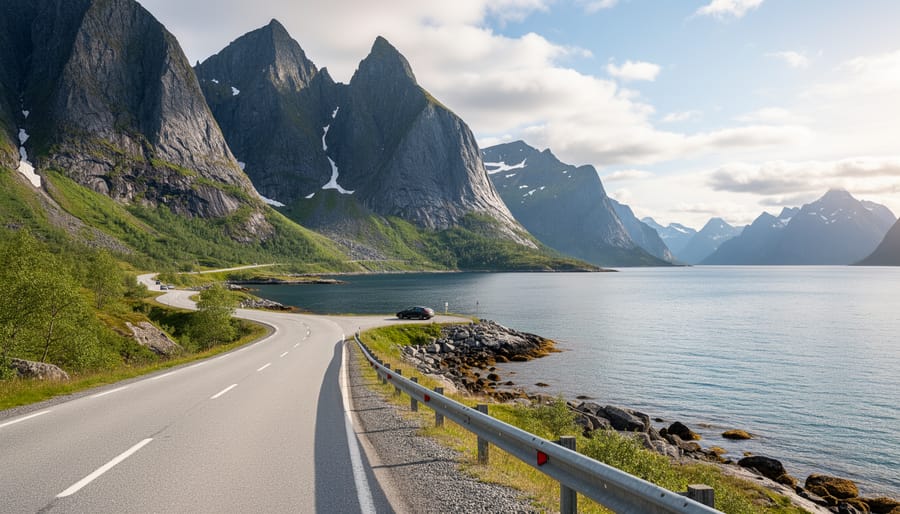
Senja is Norway’s second-largest island, and it packs much of what draws people to Lofoten into a quieter, more compact package. The Senja National Tourist Route (Nasjonal turistveg Senja) runs along the island’s outer, western coast in Troms. It’s a slow ribbon of road with jagged peaks rising straight from the sea, a view the locals sometimes describe as “Norway in miniature.”
The best stretch hugs the coast between Gryllefjord and Botnhamn, passing through small fishing communities where drying racks and red boathouses sit beneath steep mountains. Pull over at the viewing platforms and rest areas built along the route. Several were designed to blend into the landscape rather than dominate it, and they make easy stops for a flask of coffee and a long look at the horizon.
Segla is the island’s most photographed mountain, and the short but steep hike up to its ridge rewards you with views over Fjordgard and the open Atlantic. Save it for a clear day and check conditions before setting out.
Senja suits slow travel. Distances are modest, but the narrow, winding road and constant temptation to stop mean you’ll cover less ground than you expect. Give it at least a full day, ideally two.
Because fewer visitors reach Senja, a little care goes a long way. Buy fish or supplies from local shops and stay in small, locally run places so your visit supports the communities that keep this coast alive.
Practical Information: Planning Your Norwegian Road Trip
Norway rewards a little forward planning, and most of it comes down to timing, ferries and knowing where your next fuel or charging stop is. Mountain passes such as Trollstigen, Sognefjellet and Valdresflye usually close in winter and reopen in late spring or early summer, but the dates shift from year to year with snowfall. Treat any date you read as a rough guide and check live status with Statens vegvesen, the Norwegian Public Roads Administration, or the local tourist office before you set off. If you’re chasing the midnight sun in the Arctic North, midsummer brings long daylight but also the busiest roads, so book ahead.
Ferries are part of the journey on many routes, especially along the Helgeland coast and around the fjords. Some crossings run on fixed timetables and others run frequently, but sailings thin out in the evening and off-season, and queues build in peak summer. Look up departure times in advance and leave a buffer for your connection. Around Norwegian holidays, expect fuller ferries and busier roads, so plan around them or travel a day earlier or later.
Tolls are common on bridges, tunnels and some city entries. Most are collected automatically through AutoPASS, a camera and tag system, so you rarely stop to pay. If you rent a car, ask the rental company how tolls are billed, since they’re usually charged to you afterwards. Driving rules are simple but strict: keep dipped headlights on at all times, stick to posted limits (typically 80 km/h on open roads, lower in towns and tunnels), and stay alert for sheep, reindeer and elk, which wander onto roads without warning.
Norway is a leader in electric vehicles, and fast chargers are widespread along main roads, though they thin out in remote mountain and Arctic stretches. Rentals include both electric and petrol options, so pick based on how far you’ll go between towns. Expect fuel, ferries and tolls to add up, and budget more than you would for a typical European road trip.
A quick checklist before you go:
- Confirm that mountain roads on your route are open.
- Book ferries for busy crossings and peak dates.
- Ask your rental company how tolls and AutoPASS are handled.
- Pack warm layers, since mountain weather changes fast.
- Plan fuel or charging stops before heading into remote areas.
Local tourist offices are happy to help with road conditions, ferry tips and quieter alternatives, so use them freely.
Where to Stay Along the Way
Where you sleep shapes a road trip as much as the route itself. Along Norway’s scenic drives, the best stays tend to be small, rooted in their surroundings, and a short walk from the view you drove all day to see. Some even sit near places with deep roots in Viking history, which adds a layer of story to an overnight stop.
| Type | Typical setting | Best suited to | Booking tip |
|---|---|---|---|
| Family-run guesthouse | Fjord villages and valley towns | Couples and families wanting local advice | Book early for July and August |
| Mountain lodge | High passes and plateaus | Hikers and early risers | Check opening dates; many close in winter |
| Rorbu fishing cabin | Coastal harbours, especially in the north | Groups and self-catering travelers | Reserve months ahead for summer |
| Farm stay | Working farms in orchard and valley country | Families and curious travelers | Contact the farm directly for availability |
| Campsite | Beside lakes, fjords and beaches | Budget-minded and flexible drivers | Pitches fill up near famous viewpoints |
Peak summer is the squeeze. Rooms along the most photographed stretches can disappear well before you travel, so settle your overnight stops once your route is set, and leave a little slack for the spontaneous detour you will almost certainly want.
When you have a choice, lean toward locally owned places. Family guesthouses, farm stays and independent cabins keep your money in the community, and many serve breakfasts built from nearby produce. Look for operators who talk openly about how they handle waste, energy and water. Staying two nights in one spot, rather than moving on daily, also eases the load on small villages and gives you time to explore properly.
Local Tips for Driving Norway’s Scenic Routes Responsibly
Here’s the thing about Norway’s scenic routes: the drive time on your map is a polite fiction. Allow double the estimated time, because you will want to stop. A viewpoint appears, a waterfall hides around the next bend, a roadside stall sells strawberries, and suddenly a two-hour stretch has swallowed your afternoon. That’s not a problem. That’s the whole point.
Roads on these routes are often narrow, so be generous with the pull-outs (passing places cut into the roadside). If a queue is building behind you, ease in and let faster traffic go by. Locals are usually heading to work or home, not sightseeing, and a quick wave goes a long way.
Norwegians have a wonderful tradition called allemannsretten, the “right to roam,” which lets everyone walk, camp and enjoy nature on uncultivated land. With that freedom comes responsibility: take your rubbish with you, keep a respectful distance from homes and farm animals, and leave places as you found them. Use designated rest areas for toilets and bins rather than the nearest bush.
Buy your supplies in small local shops and farm stands rather than stocking up in one big town. A fresh waffle at a mountain café or a jar of local jam supports the communities that keep these routes alive.
Consider shoulder seasons too. Late spring and early autumn bring quieter roads, softer light and a calmer pace, though some mountain passes and seasonal businesses may be closed, so check conditions before you go. And when you plan your route, mix in a lesser-known stretch alongside the famous ones. You’ll often find the empty lay-by with the best view is only a few kilometres from the crowded car park.
Frequently Asked Questions About Scenic Drives in Norway
Most of these questions come up in the early planning stage, so here are short, practical answers. For anything that changes with the weather or the season, check live information before you set off.
How many National Tourist Routes does Norway have?
There are 18 designated National Tourist Routes (Nasjonale turistveger), spread from the south to the Arctic north. Each one has purpose-built viewpoints, rest areas and often striking architecture.
When is the best time of year to drive?
Late spring to early autumn is the most reliable window, since high mountain roads such as Trollstigen and Sognefjellet are usually closed in winter. Opening dates shift from year to year, so check Statens vegvesen, the national road authority, for current conditions.
Do I need a rental car, and does it have to be a 4×4?
A car is the easiest way to reach the more remote routes, as public transport is sparse in many areas. An ordinary car is fine, because the National Tourist Routes are paved public roads and a 4×4 isn’t needed in summer.
Are the routes suitable for families and nervous drivers?
Many are, especially the coastal and fjord drives, but some mountain roads have steep gradients, hairpin bends and narrow stretches. Take your time, use the pull-outs, and pick gentler routes if you’re not confident on mountain roads.
How long a trip takes depends less on distance than on how many stops you make. Between ferries, viewpoints and the occasional detour, a single route can fill a day, and a week gives you room to link two or three regions without rushing. Planning fewer, slower days usually makes for a better trip.
Conclusion
Norway rewards the traveler who slows down. The famous routes earn their reputation, from the arches of the Atlantic Road to the hairpins of Trollstigen, but the most memorable moments often come at the unplanned pull-out, the village café, or the quiet stretch of road with no tour bus in sight. That’s why pairing a headline drive with a lesser-known one, like Valdresflye or Senja, makes for a richer trip and spreads the footfall more gently across the country.
Give yourself more time than the map suggests, shop locally, and leave every viewpoint as you found it. If you’re building a winter or shoulder-season trip, it’s worth reading up on the northern lights seasons before you fix your dates.
When you’re ready for the next step, explore our regional guides, browse our accommodation listings, and check in with local tourism offices for current road conditions. Gode reiser, as they say in Norway: have a good journey.