
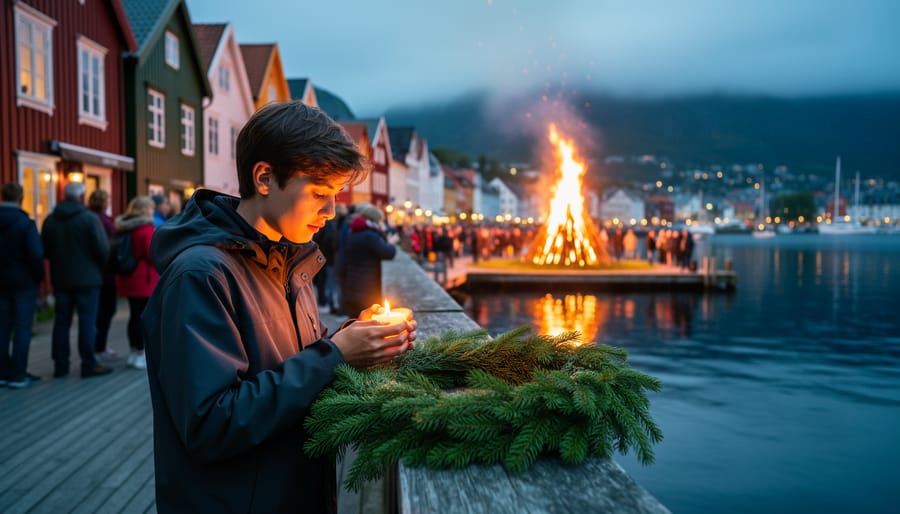
Norway’s holiday calendar reflects centuries of tradition shaped by harsh winters, coastal isolation, and a deep reverence for nature, offering travelers a chance to witness celebrations that range from midsummer bonfires to Christmas feasts lit by candlelight. Understanding these holidays means grasping when museums close, why entire towns empty out for Easter mountain cabins, and how a nation of five million manages to collectively pause for weeks at a time. Beyond the logistics, these traditions reveal what Norwegians value: community over commercialism, outdoor connection over indoor convenience, and rituals that mark the turning seasons in a country where daylight swings from endless summer sun to midwinter darkness.
Timing your visit around Norwegian holidays can enrich your experience or complicate it. Constitution Day on May 17th transforms cities into parades of folk costumes and ice cream-eating children, but book accommodations months ahead. Christmas markets begin in late November and offer a quieter, cozier side of tourism, though many attractions outside major cities shut down entirely. The Easter mountain exodus means empty Oslo streets but packed mountain lodges.
This guide walks through Norway’s major holidays in chronological order, then dives into the traditions that define them, from the butter-drenched waffles of National Waffle Day to the bonfire-jumping of Saint John’s Eve. You’ll learn which celebrations welcome visitors, how to participate respectfully, and where regional variations offer the most authentic glimpses into Norwegian life. Whether you’re planning around school holidays or hoping to catch a specific festival, you’ll leave equipped to travel thoughtfully through Norway’s cultural calendar.
Major Norwegian Holidays Throughout the Year
Winter Celebrations: Christmas and New Year
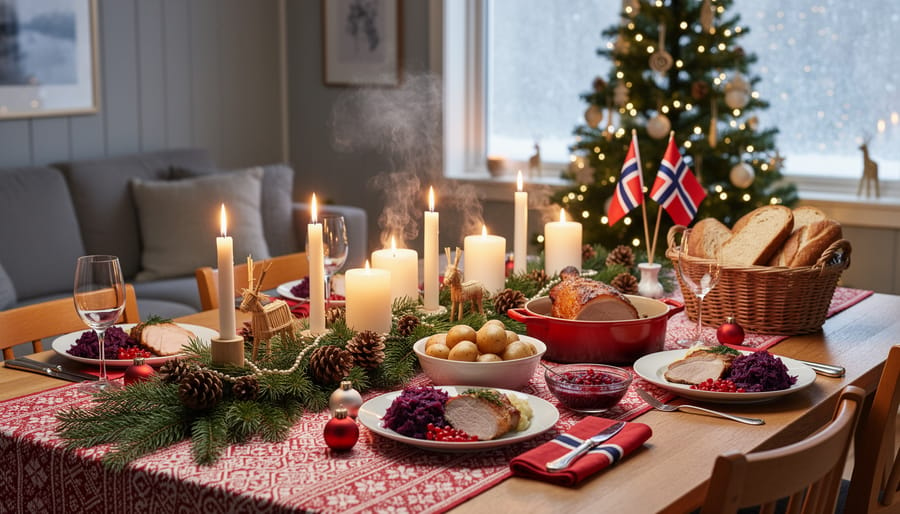
Norwegian Christmas, or jul, is the crown jewel of the country’s holiday calendar, and Christmas Eve, *julaften*, is when the magic truly happens. While many countries celebrate on December 25th, Norwegians gather on the 24th for their main feast, exchanging gifts after dinner and often attending evening church services. The meal centers on one of two traditional proteins: ribbe (crispy pork belly) or pinnekjøtt (salted and dried lamb ribs), served alongside potatoes, sauerkraut, and rich gravy. Families debate their preference with the same passion Americans reserve for Thanksgiving turkey versus ham.
The weeks leading up to Christmas transform Norwegian cities into wonderlands of twinkling lights and festive markets, offering a particularly enchanting backdrop if you’re visiting to see the Northern Lights in the fjords. Advent traditions include baking seven types of cookies, lighting candles, and decorating with natural materials like spruce branches and straw ornaments. One quirky custom survives from old Norse superstition: hiding all brooms on Christmas Eve to prevent witches and mischievous spirits from stealing them for midnight rides.
New Year’s Eve brings Norway’s cities to life with spectacular fireworks displays. Norwegians spend millions of kroner on personal fireworks, creating impromptu shows in neighborhoods across the country that rival professional displays elsewhere. Oslo’s harbor and Bergen’s harbourfront become particularly lively gathering spots. Between Christmas and New Year, many shops and businesses close, giving cities a quieter, almost dreamlike quality that contrasts sharply with the explosive energy of nyttårsaften (New Year’s Eve) itself.
Spring Festivities: Easter and Constitution Day
Spring arrives slowly in Norway, but when it does, it triggers two of the country’s most beloved celebrations. Easter (påske) transforms the country into a nation of detectives and mountain enthusiasts, while Constitution Day brings out the bunads and flags for Norway’s most patriotic display.
Norwegian Easter revolves around two distinct traditions. First, there’s påskekrim, the Easter crime wave. Publishers release mystery novels specifically for Easter week, and Norwegians settle in with chocolate eggs and whodunits. Television channels broadcast crime series marathons, and even milk cartons feature serialized mysteries. It’s Norway’s quirky way of combining hygge with suspense during the long Easter weekend.
The second tradition is the mountain cabin exodus. Thousands of Norwegians pack their cross-country skis and head to mountain hytter (cabins), where they ski across still-frozen plateaus under brilliant spring sunshine. The combination of snow and warmth makes Easter the prime season for mountain recreation, and many families have multi-generational Easter traditions at specific cabins.
Then comes May 17th, Syttende Mai, Norway’s Constitution Day and the year’s emotional peak. Unlike military parades elsewhere, Norway celebrates with children leading the way. School bands march through every town, kids wave flags and wear ribbons in red, white, and blue, and families dress in regional bunads. The day features parades and bunads from morning until evening, with ice cream and hot dogs (pølse) consumed in staggering quantities, children often eat both for breakfast.
The celebration is joyful rather than solemn, marking democracy and independence without militarism. Every Norwegian, from toddlers to grandparents, participates. Visitors lucky enough to be in Norway on May 17th witness a nation-wide family reunion where patriotism feels inclusive rather than exclusive, a celebration tourists can genuinely share.
Summer Traditions: Midsummer and St. Hans
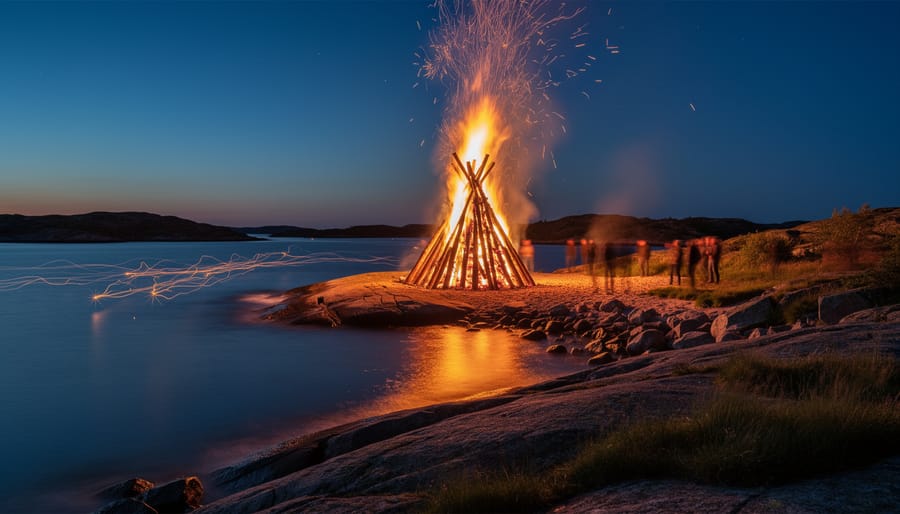
As summer arrives and darkness nearly vanishes above the Arctic Circle, Norwegians gather for Sankt Hans Aften, a fire festival on June 23 marking the year’s shortest night. Communities across Norway build massive bonfires on beaches and hilltops, often burning symbolic witches meant to ward off evil spirits, a tradition blending pagan solstice rites with Christian Saint John’s Day observances. Unlike the structured formality of Constitution Day, St. Hans is delightfully casual: friends and families gather with grilled food, guitars, and blankets to watch flames dance against the pale night sky.
The celebration connects deeply to Norway’s midnight sun explained phenomenon, when northern regions experience 24-hour daylight. These long summer days transform Norwegian life entirely, people stay outside until well past midnight, hiking trails fill at unconventional hours, and the entire country seems energized by endless light.
Summer holidays fundamentally reshape Norwegian culture from late June through early August. Most Norwegians take four consecutive weeks off, many retreating to coastal cabins or mountain hytter. Expect skeleton crews in cities, quieter streets in Oslo and Bergen, and a relaxed pace everywhere. This mass exodus means tourists encounter authentic Norwegian summer life: locals swimming in fjords, children exploring forests unsupervised, and a collective exhale after the long, dark winter.
Autumn Observances
Autumn in Norway unfolds as a quieter, more introspective season compared to the exuberant celebrations of spring and summer. As the days shorten dramatically and darkness reclaims the landscape, Norwegians embrace traditions that center on home, preparation, and gratitude for the harvest.
September and October bring slaktesesongen, the traditional slaughter season, when families, particularly in rural areas, prepare meat for winter storage. This isn’t a holiday but a practical tradition rooted in Norway’s agricultural past, now continued by those maintaining connections to the land. You’ll find regional festivals celebrating local harvests, from apple festivals in Hardanger to lamb celebrations in mountain communities.
Norwegians also practice koselig living during autumn, the art of creating warmth and coziness as compensation for declining light. Homes fill with candles, wool blankets appear on sofas, and families gather for long dinners. This isn’t performative; it’s a cultural response to geographical reality.
The shift toward winter preparation is tangible. Cabins get winterized, firewood gets stacked, and outdoor gear transitions from hiking boots to cross-country skis. For visitors, autumn offers a chance to experience Norway at its most authentic, when tourism quiets and local life takes center stage.
Time-Honored Norwegian Traditions Beyond Major Holidays
Food Traditions and Seasonal Eating
Norwegian food traditions tell a story of survival, creativity, and deep respect for what the land and sea provide. In a country where winter darkness stretches for months and summers blaze with midnight sun, eating has always followed nature’s calendar rather than fighting against it.
Preservation techniques shaped Norway’s culinary identity. Lutefisk, the infamous lye-treated cod that divides dinner tables, emerged from necessity, a way to keep fish edible through harsh winters when fresh food was scarce. Today it appears on Christmas tables more as cultural ritual than daily sustenance. Rakfisk, fermented trout that smells far stronger than it tastes, follows the same logic. Norwegians traditionally eat it around November, after autumn’s catch has fermented for months.
December brings kransekake, those towering rings of almond cake stacked into fragile pyramids for weddings and New Year’s celebrations. The recipe hasn’t changed in centuries: almonds, sugar, egg whites. Simple ingredients elevated through technique and tradition.
Seasonal eating goes beyond preservation foods. Spring means fresh lamb from mountain farms. Summer bursts with strawberries, new potatoes, and cloudberries picked from boggy highlands. Autumn delivers game meats, moose and reindeer, alongside mushrooms foraged from forests. Winter larders hold root vegetables that withstand freezing temperatures: rutabaga, carrots, cabbage.
Norway’s geography carved distinct food cultures. Coastal communities built traditions around stockfish and salt cod. Mountain valleys developed sheep-based cuisines. Northern regions incorporated Sami ingredients like reindeer meat and dried fish.
This seasonal rhythm wasn’t romantic, it was survival. But it created a food culture that honors ingredients, wastes nothing, and celebrates abundance when it arrives. Modern Norwegians maintain these traditions even when supermarkets stock strawberries year-round.
The Bunad: Norway’s National Costume
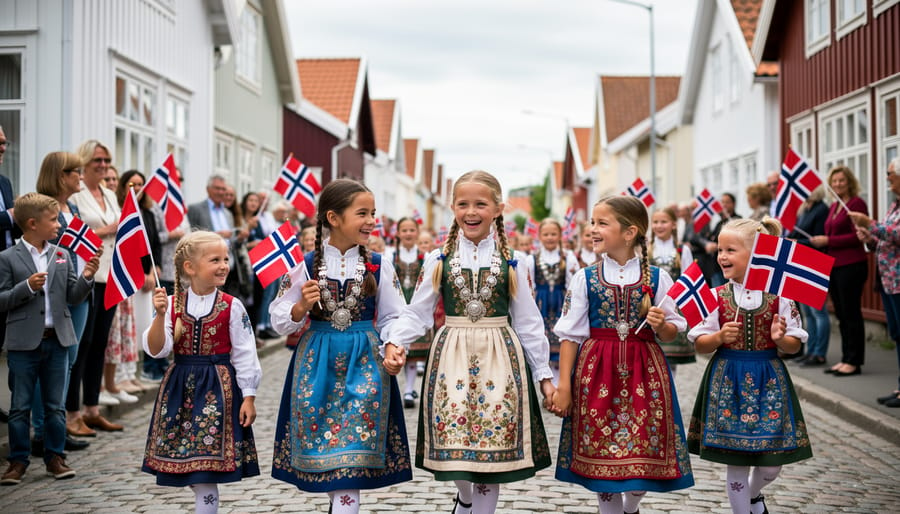
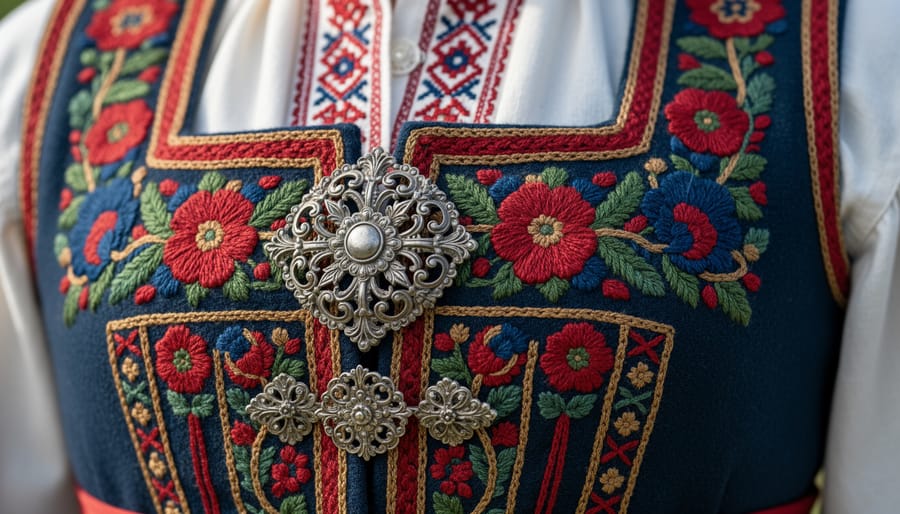
The bunad represents far more than festive clothing in Norway, it’s a living connection to regional identity, family heritage, and national pride. Unlike generic “folk costumes,” each bunad design belongs to a specific district or community, with distinct embroidery patterns, colors, and silver jewelry that identify the wearer’s ancestral roots. Families often pass bunads down through generations, and commissioning a new one represents a significant investment, sometimes costing several thousand dollars and taking months to complete by skilled craftspeople.
Norwegians wear their bunads during major celebrations, most notably on Constitution Day (May 17th) when streets fill with a stunning display of regional costumes during children’s parades and family gatherings. Weddings, christenings, and significant anniversaries also call for bunad wear. The tradition creates a remarkable visual tapestry, at any May 17th celebration, you’ll see dozens of different designs representing communities from Hardanger to Nordland, each with unique aprons, bodices, and intricate metalwork.
For tourists, Constitution Day offers the best opportunity to witness this tradition in full glory. Arrive early at parade routes in cities like Oslo, Bergen, or Trondheim to see families dressed in their regional finest. Many Norwegians welcome polite questions about their bunads and take pride in explaining their particular design’s origins and details.
However, bunads aren’t costumes for tourists to try on or purchase as souvenirs. They represent deep cultural significance and family investment. Appreciate them through observation and photography (always ask permission first), and understand that wearing a bunad carries responsibilities, it should represent your actual family heritage or adopted Norwegian community. Some museums offer exhibits explaining bunad history and regional variations, providing cultural context without appropriation.
Regional Variations and Local Celebrations
Norway’s diverse geography and cultural heritage mean that traditions celebrated in the far north look quite different from those in coastal western regions or southern valleys. Understanding these regional variations enriches your cultural experience and opens doors to authentic celebrations far from the typical tourist trail.
The Sami people of northern Norway, Sweden, Finland, and Russia maintain distinct cultural traditions that predate Norway’s formation as a nation. Sami National Day on February 6th celebrates indigenous heritage with joik (traditional singing), reindeer racing, and colorful gákti (traditional Sami clothing) worn with pride. The Easter Festival in Kautokeino brings together Sami communities for one of the year’s largest gatherings, featuring traditional competitions, concerts, and the chance to witness reindeer herding culture firsthand. These celebrations offer profound cultural insights, but visitors should approach them with respect and cultural sensitivity.
Western Norway’s coastal communities celebrate their maritime heritage through festivals often overlooked by visitors focused on fjord scenery alone. Bergen festivals include the Bergen International Festival in May, showcasing music and arts, but smaller fishing villages host equally authentic celebrations. The Gladmat food festival in Stavanger transforms the city into a culinary wonderland each July, while Ålesund’s Jugendfest celebrates its distinctive Art Nouveau architecture rebuilt after the 1904 fire.
Southern regions maintain strong ties to agricultural traditions. The medieval festival at Maihaugen in Lillehammer recreates historical life, and the Telemarksfestivalen celebrates traditional folk music and dance unique to the inland valleys. Eastern Norway’s mining town of Røros hosts a winter market in February that has drawn visitors since 1644, offering perhaps Norway’s most atmospheric historic celebration.
These regional festivals provide windows into how geography, history, and local industries shaped distinct Norwegian identities that persist today, rewarding travelers willing to venture beyond the usual routes.
How Tourists Can Experience Norwegian Holidays and Traditions
Experiencing Norwegian holidays firsthand transforms a visit from sightseeing into cultural immersion. The key is timing your trip to coincide with celebrations while understanding local customs and business hours.
Major holidays bring Norway nearly to a standstill. Christmas Eve, Christmas Day, and New Year’s Day see almost everything closed except some hotels and restaurants. Constitution Day is different, the celebration happens outdoors, so you’ll find parades, bunads, and festivities everywhere, but shops remain shuttered. Easter means many Norwegians flee to mountain cabins, creating quieter cities but limited services. Always check opening hours in advance and stock up on essentials beforehand.
Constitution Day offers tourists the most accessible celebration. Watch the children’s parades (barneogtog) in any city or town, where you’ll see bunads in stunning variety. Oslo’s parade past the Royal Palace is spectacular, but smaller communities often provide more intimate experiences. Wear something smart if you attend, though tourists aren’t expected to own a bunad. Enjoy ice cream and hot dogs alongside locals, but remember this is their national day of pride and democracy, not a party for foreigners.
For Christmas, consider joining organized Christmas markets in Bergen, Oslo, or Trondheim during Advent. These offer glimpses into seasonal traditions without intruding on family celebrations. Some folk museums host traditional Christmas events where visitors are genuinely welcome.
Regional festivals throughout the year, particularly in coastal and northern communities, welcome respectful visitors. Sami celebrations like the Riddu Riđđu Festival in Kåfjord or local food festivals provide cultural exchange opportunities beyond major holidays. When exploring how the fjords and seasons shape Norwegian life, you’ll discover small-scale harvest festivals and maritime traditions that tourists rarely encounter.
If locals invite you to join celebrations, accept graciously. Bring a small gift (flowers, chocolate, or wine), remove your shoes indoors, and ask questions genuinely. Norwegians appreciate curiosity over assumptions, and sharing food or stories creates meaningful connections that guidebooks can’t replicate.
Norwegian holidays and traditions aren’t just dates on a calendar. They’re living expressions of values that have shaped this nation for centuries: deep respect for nature’s rhythms, fierce pride in community, and careful preservation of cultural heritage. When you witness children marching through Oslo’s streets on Constitution Day, join locals around a Midsummer bonfire, or taste Christmas dishes prepared from recipes passed down through generations, you’re experiencing more than tourist attractions. You’re connecting with the soul of Norway itself.
Timing your visit to coincide with these celebrations transforms a standard holiday into something far richer. You’ll see Norwegians at their most welcoming, cities and villages dressed in their finest, and traditions performed with genuine joy rather than staged for cameras. Many of these celebrations happen outdoors, aligning perfectly with sustainable travel practices and Norway’s commitment to nature.
Approach these experiences with respect and curiosity. Ask questions, listen to stories from locals, and participate where invited. Whether you’re hiking to an Easter cabin, watching bonfire sparks rise into the midnight sun, or simply observing how Norwegians gather around shared traditions, you’ll discover that the country’s greatest treasures aren’t just fjords and mountains. They’re the people and customs that make Norway extraordinary.
Frequently Asked Questions About Norwegian Holidays and Traditions
What is Norway’s most important holiday?
Constitution Day (May 17th) holds special significance as Norway’s national day, celebrated with children’s parades, traditional costumes, and nationwide festivities marking Norwegian independence and democracy. Christmas (jul) is equally important culturally, though it’s more family-focused and private.
Are shops and attractions open during Norwegian holidays?
Most shops, museums, and many restaurants close on major holidays like Christmas Eve, Christmas Day, New Year’s Day, Easter Sunday, and Constitution Day. Plan ahead by stocking up on essentials and checking opening hours, as even supermarkets typically close early on holiday eves.
Can tourists participate in Constitution Day celebrations?
Absolutely! Norwegians welcome respectful participation in May 17th festivities, join the crowds watching children’s parades, enjoy ice cream and hot dogs, and soak in the celebratory atmosphere. Just remember this is Norway’s national day, so approach it with appreciation rather than treating it as a tourist spectacle.
What should I know about experiencing Christmas in Norway?
Norwegian Christmas is celebrated primarily on December 24th (julaften), when families gather for traditional meals and gift exchanges. As a tourist, expect most businesses to close from December 24-26, but you can experience the festive atmosphere at Christmas markets in early December and enjoy the cozy winter ambiance throughout the season.
How do Norwegians celebrate Midsummer?
Midsummer (Sankt Hans Aften) on June 23rd centers on bonfire celebrations, often held near water, marking the year’s shortest night. Norwegians gather with friends and family for outdoor festivities, taking advantage of the midnight sun in northern regions.
Is it appropriate for tourists to wear a bunad?
No, tourists should not wear bunads, these handcrafted national costumes carry deep cultural and regional significance for Norwegians and often represent family heritage. Appreciate them as beautiful expressions of Norwegian identity when you see locals wearing them on Constitution Day and at weddings, but wearing one yourself would be considered disrespectful cultural appropriation.
These answers reflect the practical realities many visitors encounter when timing their Norwegian trips around cultural celebrations. Holiday closures can catch unprepared travelers off guard, particularly during the Christmas period when even convenience stores shut their doors. Knowing that Constitution Day welcomes participation while the bunad remains off-limits helps tourists navigate cultural boundaries respectfully.
The key to experiencing Norwegian holidays as a visitor lies in balancing enthusiasm with cultural sensitivity. Norwegians generally appreciate when tourists show genuine interest in their traditions, but they also value authenticity over performance. Watching rather than dominating, asking questions rather than assuming, and respecting the difference between public celebrations and private family traditions will serve you well.
Timing matters beyond just holiday dates. The weeks leading up to Christmas transform Norwegian cities with markets and decorations, offering atmospheric experiences even if you can’t be there for the private julaften celebrations. Similarly, the days around Constitution Day buzz with anticipation and preparation, giving you a fuller cultural experience than just showing up on May 17th itself.
Remember that Norwegian holidays often mean Norwegians are traveling too. Easter sees a mass migration to mountain cabins, summer holidays empty the cities, and Christmas brings everyone home to family. This seasonal rhythm affects everything from accommodation availability to the energy of different destinations. A winter visit to Bergen during Christmas markets offers a completely different experience than a summer trip when locals have fled to their cabins and tourists fill the streets.